
This post contains affiliate links.
Throughout my life, I have experienced and enjoyed the beauty and dynamics of hummingbirds. They have been a part of my childhood and continues to be a larger part of my adult life. Hummingbirds are nature’s most beautiful, inquisitive, and acrobatic bird species.
Learning the secrets to entice the re-occurrence of welcome house guests is half the battle. Let me share with you the knowledge I have gathered on how to increase your backyard hummingbird activity. In a week’s time, by following all of these steps, you will be successful in becoming an outstanding hummingbird whisperer.
How do I attract hummingbirds into my backyard?
- Choose the color red
- Make homemade nectar
- Keep hummingbird feeders clean
- Prevent bees and wasps exposure
- Eliminate pesticides and predators
- Remove territorial bullies
- Add Protein
- Include a water feature
- Plant flowers with prolific blossoms
Understanding what hummingbirds are seeking and enticing them into your space is the first major step in this process. Combining all of these useful tips will not only expand your hummingbird participation in your backyard, but it will create an unbelievable visual extravaganza desired by everyone.
Choose the Color Red
When searching for food, hummingbirds are attracted to the color red whether true or artificial. They are also interested in brightly colored orange to reddish tubular-shaped blossoms. This particular flower shape tends to hold the most nectar and becomes extremely convenient for a hungry hummingbird.
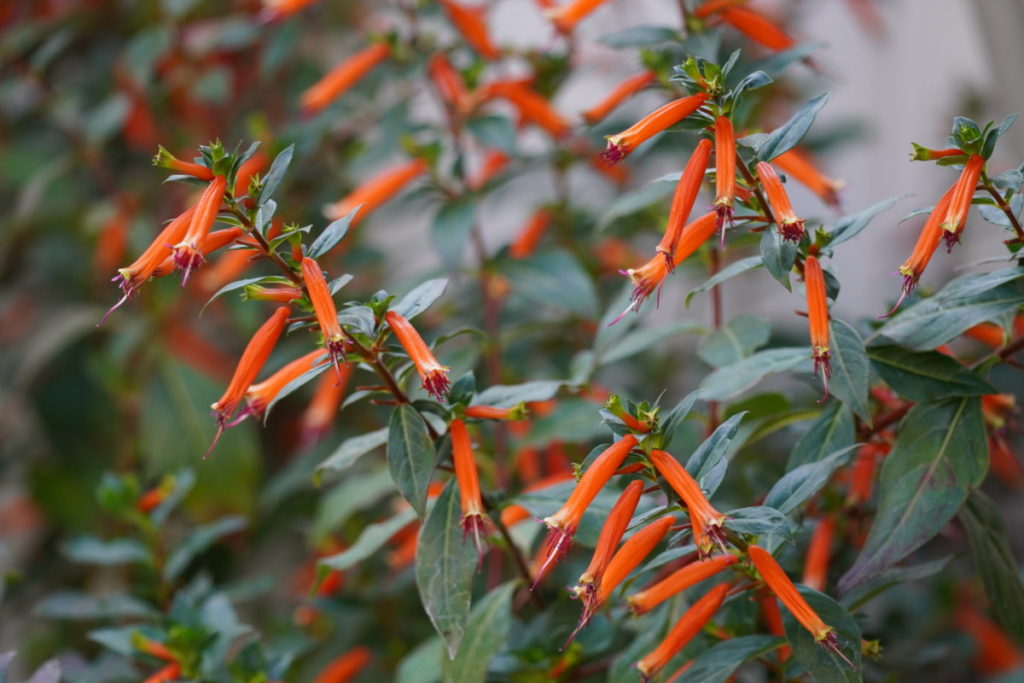
Incorporate and use red tubular flowering plants such as Cigar Plants and Salvia Plants in your backyard design. These plants are drought-tolerant, easy to maintain and produce a prolific amount of flowers full of nectar.
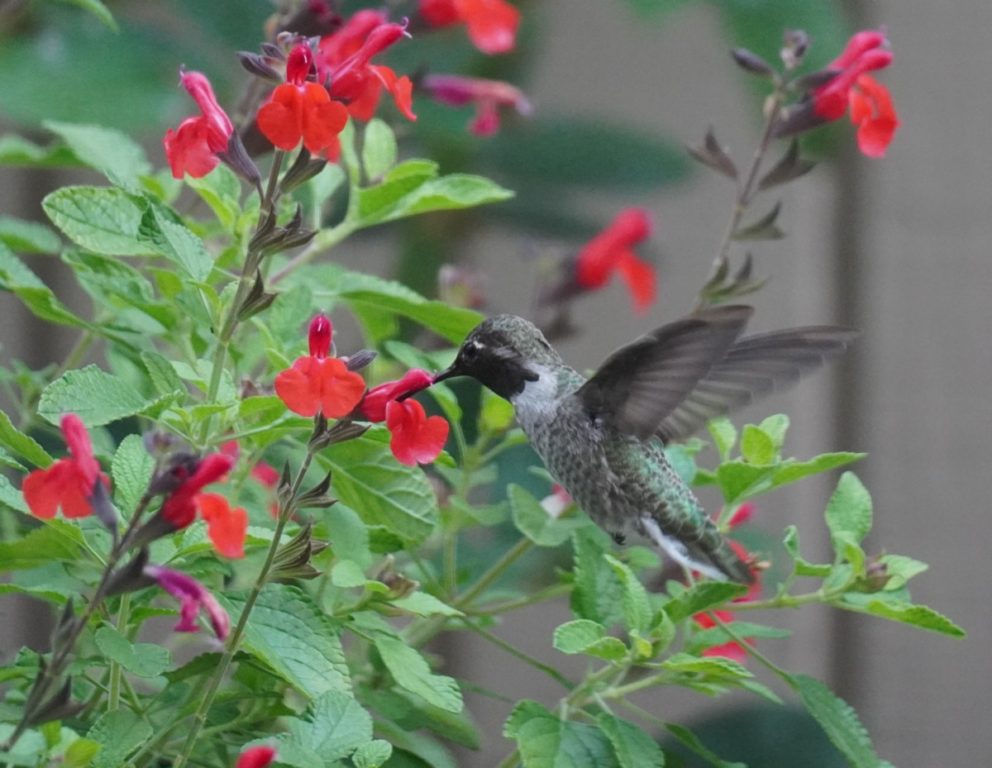
Male Anna’s Hummingbird
Plant perennials that produce flowers throughout the seasons to keep your hummingbirds returning to your backyard sanctuary.
Hang hummingbird feeders with a red base and red flowers. Hummingbirds can see and are attracted to the color red.
When refilling your hummingbird feeder with homemade nectar avoid using or adding red food dye. Red food dye is unnecessary and can be harmful with extended use for a hummingbird when regularly consumed. The red feeder base alone will satisfy to catch the hummingbird’s attention.
Make Homemade Nectar
Homemade nectar has the advantage of ensuring your hummingbird food is pure and unmodified. The best homemade nectar recipe consists of 1 cup of granulated white cane sugar dissolved in 4 cups of filtered water.
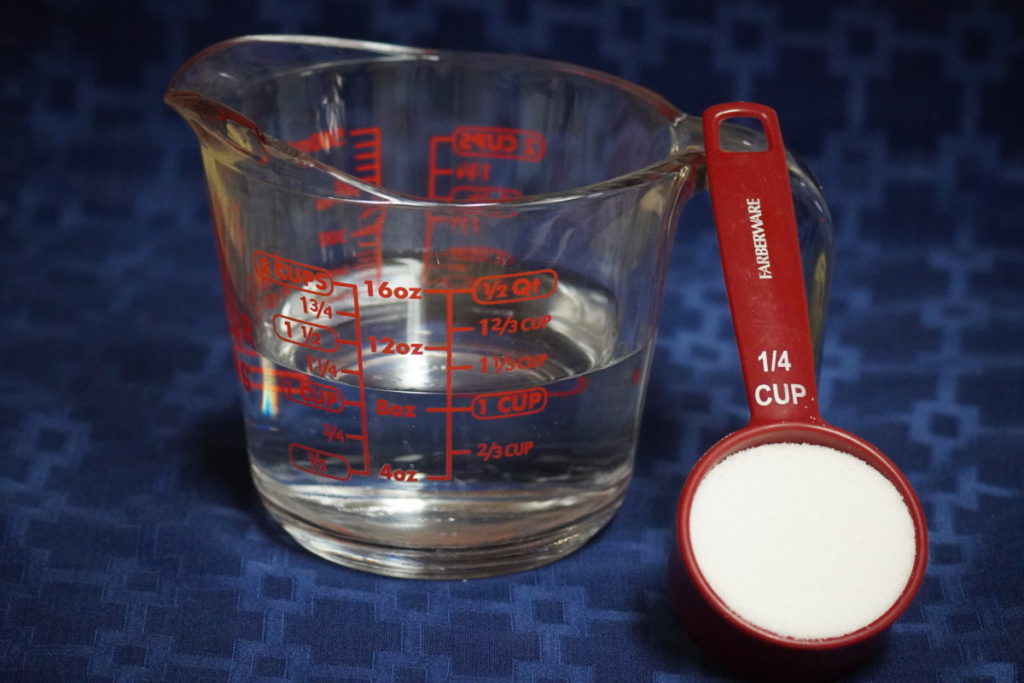
On the stovetop, boil the sugar and water solution. If microwaving, use a Pyrex measuring cup and microwave in increments of 30 seconds to 1 minute until you get your desired temperature.
Let the mixture completely cool before filling your feeders. You can add ice cubes to help with the process in cooling down your nectar but remember it will dilute your nectar solution. If you decide to take this route make your nectar more concentrated before adding your ice cubes.
Do NOT use honey or artificial sweeteners when preparing your nectar as this will cause harm to the hummingbirds.
Even though hummingbirds are attracted to the color red, remove red dyes from your homemade hummingbird nectar. The red base from your feeder will suffice in attracting your hummingbirds.
Keep Hummingbird Feeders Clean
Keep fresh homemade hummingbird nectar in a clean feeder to prevent mold, mildew, and diseases from growing or spreading. Clean your feeder at least once a week. Bacteria can easily grow in warm weather, therefore cleaning the feeder more frequently is necessary.
Regularly rotate your feeding stations to avoid spreading bacteria and contaminating your area from sick birds. There is a greater chance of diseases being shared at a commonly used and regularly visited hummingbird feeder then there would be otherwise. Diseases are transferred and linked to improper or less frequently cleaned hummingbird feeders.
Hummingbirds can also catch diseases due to poor hygiene or by consuming too much sugar or carbohydrates.
Read my article on: Hummingbird Diseases: From Pathogens to Prevention
Prevent Bee and Wasp Exposure
During extremely hot days, bees and wasps will hover around hummingbird feeders in search of sugar or water. Over-sweetened homemade nectar that is too sweet, for example, 1 part sugar to 2 parts water can attract unwanted visitors such as bees and wasps. This annoyance can disrupt the flow of hummingbird activity.
Experiment with the recommended recipe guidelines for the homemade hummingbird nectar of 1 part sugar to 4 parts water to find the right sugar to water ratio when filling your preferred sized feeders.
Bees and hummingbirds can synchronize in harmony if the situation is forced upon them. For the most part, they tend to leave each other alone but when bees become a distraction, irritation or even a bully is when hummingbirds will be chased away.
Therefore, provide an alternate source of water for the bees. Bees prefer to land on rocks in a flatbed of water. This allows a safe landing surface while they hydrate and collect water without drowning.
Bee watering stations are a wonderful addition to your hummingbird sanctuary. This can be as simple as providing a shallow potted plant saucers or a more elaborate water lily container to your bee watering station.
Since bees see the color red as black, they are attracted to the color yellow. Hummingbirds are attracted to the color red, therefore, it is best to purchase a feeder without yellow flowers.
Another way to help eliminate bees around your feeder is to paint the predisposed yellow flowers with non-toxic red paint. This allows the whole structure to be red which hummingbirds prefer.
Eliminate Pesticides and Predators
Remove any harmful pesticides in your backyard. Any chemical agent that is used to cure or protect a plant from insects or diseases can potentially be harmful to hummingbirds.
There are some safe products on the market that use Neem oil which is considered to be organic. Neem oil is non-toxic to birds, mammals, bees and plants.
When using these products make sure to spray at night while the hummingbirds are sleeping. When the product is dry it does not affect the hummingbirds.
Home pets can be considered predators to your friendly flying outdoor companions. Pets have a natural instinct to hunt and to protect their territory and will chase away the hummingbirds we are working so hard to welcome. We want to keep our hummingbirds feeling safe and secure in their own habitat without being harmed.
Some other common hummingbird predators include: cats, hawks, roadrunners, orioles, crows, frogs, fish, spiders and praying mantis.
Remove Territorial Bullies
Male hummingbirds can become extremely territorial when establishing breeding grounds when enticing a female. They will vocalize their displeasure of an intruder by making quick buzzing and chirping noises to signal to their opponent that they are unwanted.
Other body language displays of male dominance include showing off their brightly colored head, flaring or spreading their tail feathers, or using their sharp beak to bite or probe undesirable visitors.
Male hummingbirds advertise and boast their ability to defend and supply plentiful nectar flowering plants and hummingbird feeders to females. This benefits attracting a potential mate in two ways. The larger supply of food is equivalent to a males ability to provide for their lady and their potential offspring while giving them the opportunity to show off their physical, agile, powerful, and acrobatic stamina. These traits are highly desired by female hummingbirds.
When male hummingbirds start to show too much aggression in your neighborhood, rotate and increase the distance between the hummingbird feeders. The farther apart the feeders, the more effort and energy a male hummingbird must expend to secure his territory.
The excessive output of energy will either make the male hummingbird extremely exhausted making fewer trips to the desired feeder or they will figure out the best strategy on how to conserve energy while guarding their territory.
Eventually, you will hear a tired hummingbird interject more territorial vocal chirps and interactions in hopes to dismiss an unwanted presence of an intruder instead of physically chasing them away.
To conserve energy, a male hummingbird will have to wisely pick and choose his battles. This keeps the males occupied and distracted allowing others to gather and enjoy a quick nutritious meal at your feeder.
Add Protein
Adding a variety of small bugs, aphids, gnats, leafhoppers, flies, mosquitoes and spiders will give the hummingbirds the protein and amino acids needed to have a healthy balanced diet.
A large amount of protein that is consumed by hummingbirds helps to build muscle which assists in their daily flying activity.
Composting your leftover kitchen scraps in a compost bin will not only reduce the amount of carbon footprint and save the environment but it will also create a large volume of gnats that can be easily consumed by hummingbirds as a quick daily snack.
Watching hummingbirds snatch bugs in mid-air can be an extra added entertainment feature as they can portray the image of dancing.
Include a Water Feature
Hummingbirds typically receive all the liquid they need to stay hydrated by the nectar they drink. On many occasions they find other water sources such as water fountains, misting devices or even your local garden hose to take a nice refreshing bath or to quench their thirst. Water that happens to pass their beak while bathing is a bonus, but is not necessary for survival.
A water feature in any space is an added bonus in the mind of a hummingbird!
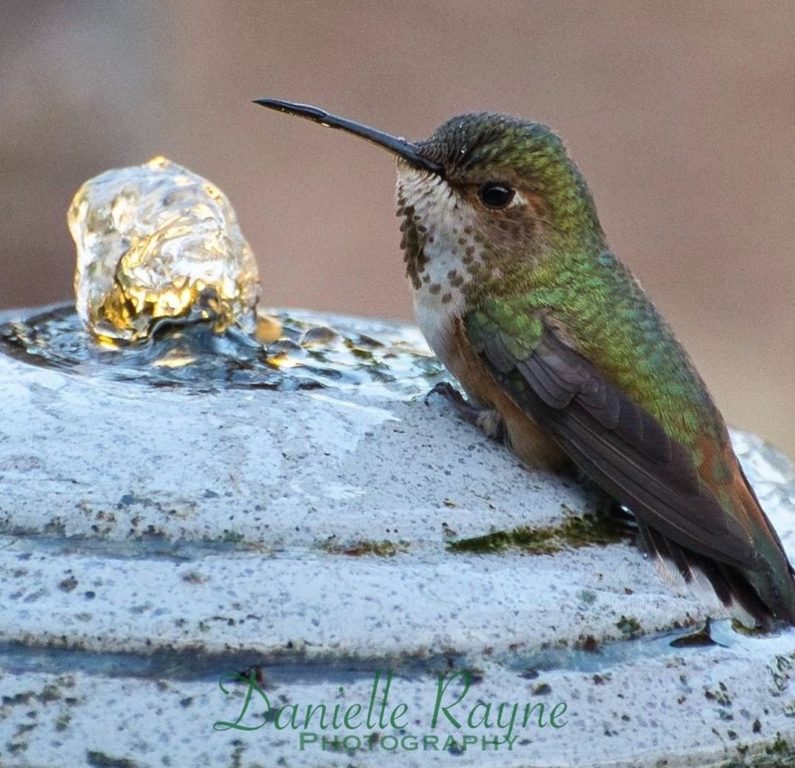
Taken: Riverside Rancho Glendale, CA
The most successful element is to have a birdbath or shallow fountain in your backyard. Hummingbirds can not swim. To avoid drowning provide a shallow misting birdbath or a fountain that sprays water is ideal for these birds. The enthusiasm displayed when bathing or even the tranquil and relaxing sound of flowing water will invite the hummingbird to savor their surroundings.
Watering your plants on a hot summer day will catch the attention of a hummingbird who passes by and stops to bathe under your garden hose.
Once they are done bathing they will perch and preen while basking in the warmth of the sun until every last feather is completely dry. Hummingbirds like to use their bill, claws, and tongue to preen themselves. This process eliminates oil and dirt from their feathers to make them efficient aerodynamic flyers.
Prolific Blossoms
There is a variety of nectar-producing flowering plants that come in all shapes, sizes, and colors that hummingbirds admire. They are attracted to many shade plants as well as plants who need exposure to full sun.
Hummingbirds favor long tubular-shaped flowers that usually drip with nectar. Their number one color of choice for locating flower blooms is the color red but will also gravitate towards the color pink, purple, and orange which are all in the same red hue.
Best flowering plants that prefer full sun and are drought tolerant include:
- Hot lips – Salvia microphylla
- Friendship Sage – Salvia ‘Amistad’
- Cigar Plant– Cuphea ignea
- Blue Fortune Hummingbird Mint (Hyssop) – Agastache
- Red Happiness Hummingbird Mint (Hyssop) – Agastache
- Fall Fiesta Hummingbird Mint (Hyssop) – Agastache
The above list of flowering plants produces prolific amounts of flowers that will encourage hummingbirds to work extremely hard to defend their territory.
Best flower producing perennial plants for shade include:
- Old-Fashioned Bleeding Heart– Dicentra spectabilis
- Fern-Leaf Bleeding Heart (King of Hearts) – Dicentra eximia
- Coral Bells – Heuchera sanguinea
- Hardy fuchsia – Fuchsia magellanica
- Lungwort – Pulmonaria officinalis
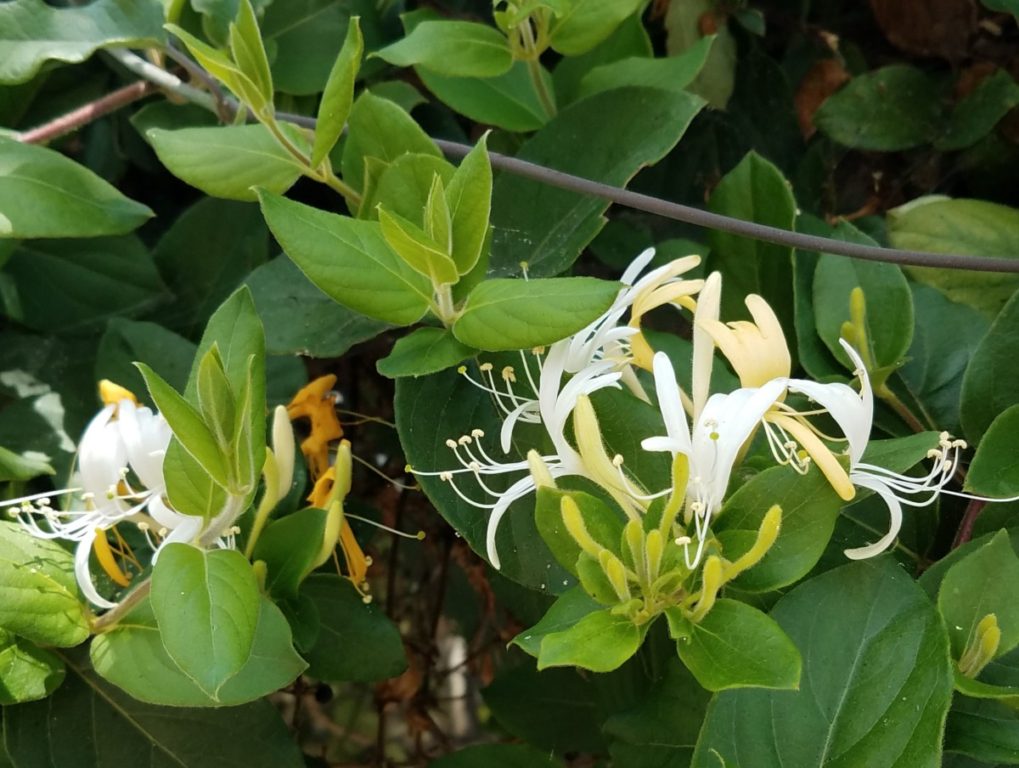
Popular vines to attract hummingbirds include:
- Red Trumpet Vine – Campsis radicans
- Japanese Honeysuckle – Lonicera japonica
- Orange Cape honeysuckle -Tecoma capensis
Popular bushes to attract hummingbirds include:
- West Indian Lantana –Lantana camara
- Pride of Madeira – Echium candicans
- Manzanitas – Arctostaphylos
I have witnessed first hand the rambunctious consistent activity of hummingbirds zipping in and out of the Pride of Madeira defending their territory. This bush produces prolific blue flowers in the spring and summer.
Popular trees to attract hummingbirds include:
- Weeping Bottlebrush – Callistemon viminalis
- Persian silk tree or Mimosa – Albizia julibrissin
You might question how the hummingbirds drink the nectar from the Bottlebrush’s unusually shaped flowers? Actually, the flowers are a cluster of long dense cylindrical flower spikes which is the perfect shape for a hummingbird’s beak.
Select plants that bloom throughout the 4 seasons to guarantee a never-ending and constant supply of food for the hummingbirds. For example, choose flowering plants that bloom in the spring such as Old-Fashioned Bleeding Heart and flowers that bloom in early summer to the beginning stages of frost such as Friendship Sage or Hot Lip Salvia. The last two mentioned are famous for their long blooming season.
While these birds feast and collect their nutrients they also help pollinate the flowers they visit. This creates a healthy balanced ecosystem in your backyard.
We all love to see hummingbird activity during any season. Incorporating all of these options will entice and create higher traffic activity in your backyard and encourage hummingbirds to stay for years to come.
Conclusion
If a hummingbird enthusiast initially takes the time to turn their backyard into a Five-star oasis for hummingbirds, there will be hours of entertainment at your fingertips.
Once set up properly, it will only require a few minutes of regular maintenance to keep the oasis running smoothly as a perpetual Five-star haven for hummingbirds.
In repayment, these aerodynamic acrobats will provide endless amusement and diversion.
Happy Hummingbird Watching!
Backyard Visitors participates in affiliate programs which compensate us for referring traffic.
