
This post contains affiliate links.
This article identifies all hummingbirds documented as seen in Maryland and where they are seen in the state. It further identifies if that specific hummingbird species is a year-round resident, a seasonal visitor, or a rare vagrant hummingbird seen in Maryland.
Which Species Of Maryland Hummingbirds Are Found In The State?
There are seven species of hummingbirds documented as seen in Maryland.
Documented Maryland hummingbirds, listed in order of frequency seen are Ruby-throated, Rufous, Calliope, Black-chinned, Allen’s, Mexican Violetear and Anna’s hummingbirds.
Listed In The Order Of Frequency Seen:
These are the Maryland statistics at the end of 2023, as reported by eBird.org.
Click the “Documented” link below for the current Maryland stats.
| Hummingbirds: | Number Seen: | Documented: |
| Ruby-throated | 93,049 | Documented |
| Rufous | 857 | Documented |
| Calliope | 212 | Documented |
| Black-chinned | 76 | Documented |
| Allen’s | 25 | Documented |
| Mexican Violetear | 24 | Documented |
| Anna’s | 4 | Documented |
| Total Seen: | 94,247 |
These 7 hummingbird species are found in Maryland and are further classified into three groups:
Year-round residents, Seasonal visitors, and Rare/Vagrant visitors.
| Hummingbird: | Year-Round, Seasonal, Rare/Vagrant |
| Ruby-throated | Seasonal |
| Rufous | Rare/Vagrant |
| Calliope | Rare/Vagrant |
| Black-chinned | Rare/Vagrant |
| Allen’s | Rare/Vagrant |
| Mexican Violetear | Rare/Vagrant |
| Anna’s | Rare/Vagrant |
For more information on Maryland hummingbirds: Read my article: Maryland Hummingbird Migration
Maryland Hummingbirds That Are Year-Round Residents
There are no hummingbirds classified as year-round residents in Maryland.
This hummingbird classification is defined as year-round residents residing in Maryland 365 days a year.
Contrary to popular belief, hummingbirds can withstand far lower temperatures than most people would expect.
Some banded hummingbirds have been observed at temperatures as low as -9 degrees Fahrenheit with a wind chill of -36 degrees Fahrenheit, according to eBird.org.
See my article: 3 Reasons Why Hummingbirds Are Banded
Maryland Hummingbirds That Are Seasonal
Hummingbirds that fit within this category are those that migrate through Maryland on a spring or fall emigration basis.
Hummingbirds move south to spend the winter in Mexico and Central America in the fall, after migrating north in the spring to reproduce.
Due to their preference, an ailment, or advanced age, certain seasonal hummingbirds may spend the whole winter in the state.
To see a current sighting map of Maryland seasonal hummingbirds, click the links below:
RUBY-THROATED HUMMINGBIRD – (Archilochus colubris)
Conservation Status: Least concerned
Kingdom: Animalia
Phylum: Chordata
Class: Aves
Order: Apodiformes
Family: Trochilidae
Genus: Archilochus
Species: A. colubris
Scientist Carl Linnaeus of Sweden is credited with giving the Ruby-throated hummingbird its scientific name. He initially classified the species as “Trochilus colubris.” Its name was revised more than a century later when German botanist Ludwig Reichenbach classed it as “Archilochus colubris,” which is now its scientific name and means “sky spirit/sun-god bird” or “top thief.”
Male Ruby-throated hummingbirds:
The beautiful iridescent blood-red gorget of male Ruby-throated hummingbirds ends at the neck.
His distinctive features are black wings, a light gray underbelly, and a dull metallic green topside.
The Ruby-throated hummingbird is a tiny species of hummingbird, measuring 2.8 to 3.3 inches in length and weighing less than 4.5 grams, or two U.S. dimes.
They live for three to five years on average.
The metal plate that shields the wearer’s throat during combat to prevent injuries is the inspiration behind the name of the gorget on a male hummingbird.
This name is acceptable and fitting to characterize the physical characteristics of male hummingbirds, since they fight fiercely for their own territory.
Read my article: Hummingbird Gorgets Explained
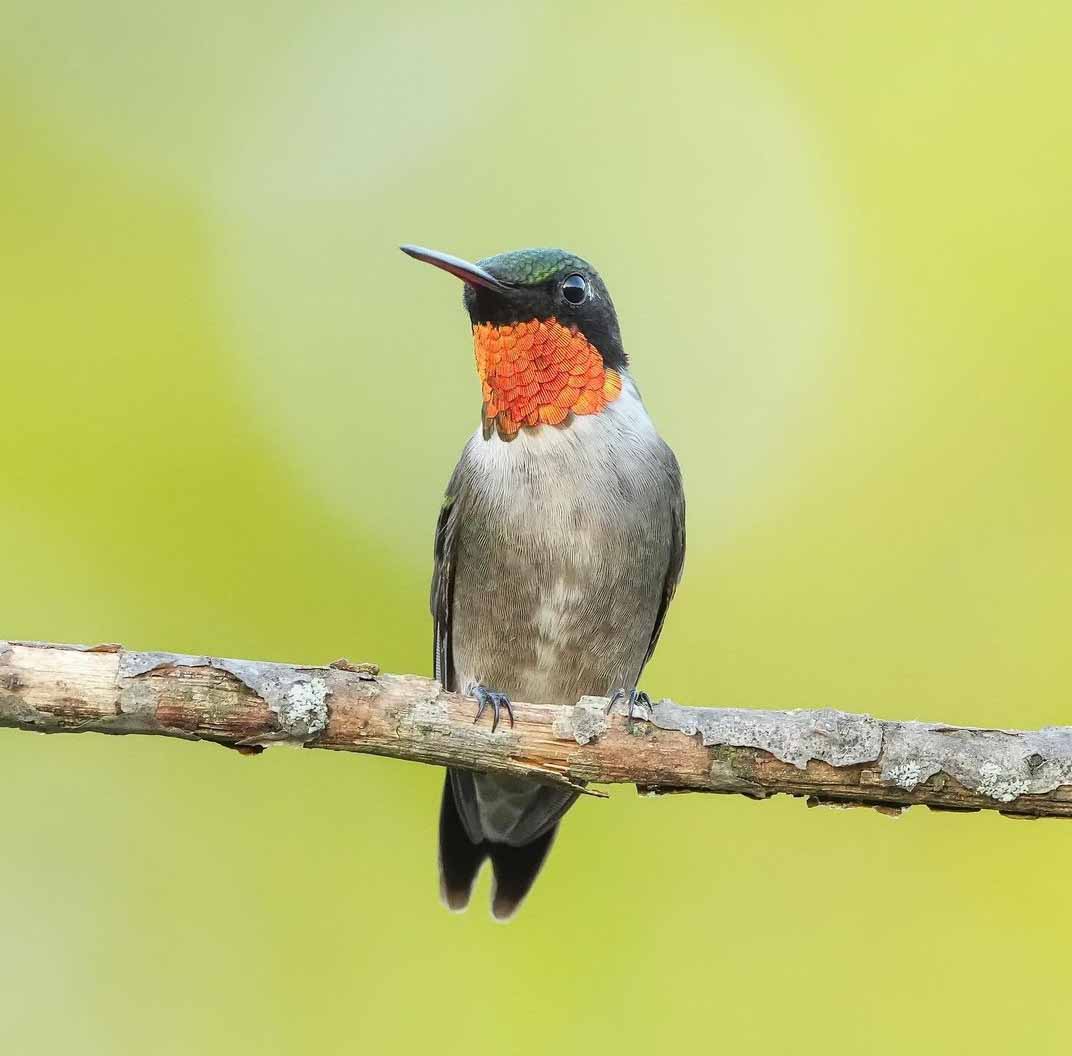
Photo by: Andy Raupp
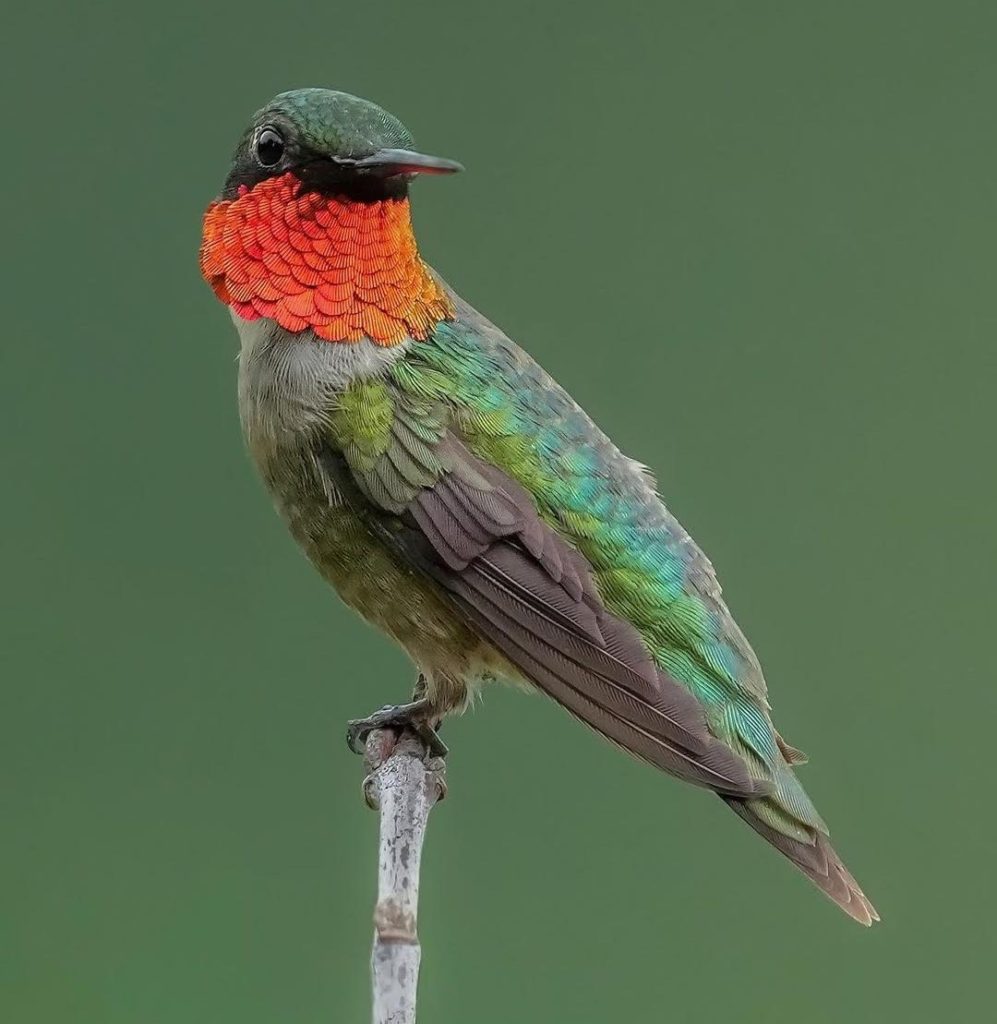
Photo By: Andy Raupp Photography
Female Ruby-throated hummingbirds:
Ruby-throated hummingbird females are usually larger than males, with a white throat stippled with light spots.
Ruby-throated hummingbird’s life expectancy is roughly three to five years.
The oldest female Ruby-throated hummingbird on record, at nine years old, is nearly twice as old as the male life expectancy.
See my article: Hummingbird Parents: (Mating to Nesting)
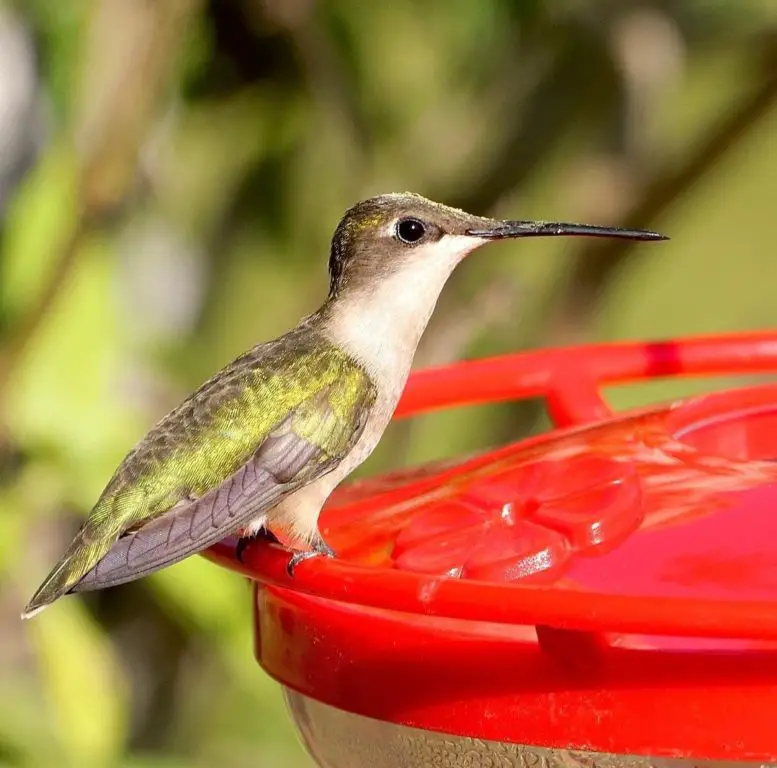
Photo by: Dgen.photos
Note: The pollen on her head and beak. This female Ruby-throated hummingbird has been busy pollinating and drinking nectar from flowers to sustain her high metabolism.
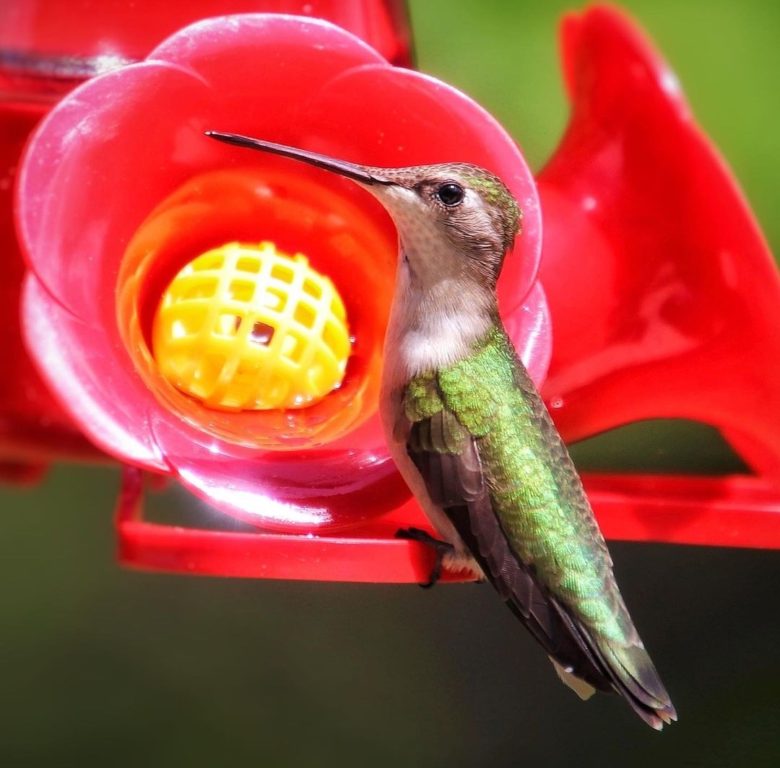
Photo by: Paula Leftwich
Juvenile Ruby-throated hummingbirds:
Ruby-throated hummingbird juveniles, both male and female, have a white throat with faint stippling, just like their mother. As the males become older, they start to show some color around their necks, and finally their stronger red throat feathers take center stage and proudly show off a vibrant gorget.
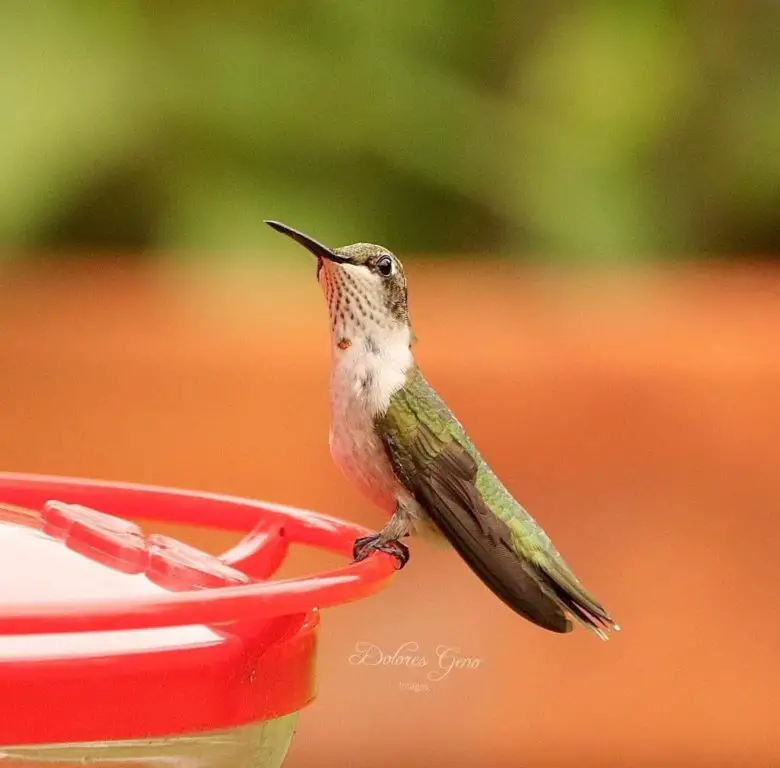
Photo by: Dgen.photos
Note: The throat feathers are slowly coming in, displaying a few dots of color near the neckline and showing the first stages of adolescence.
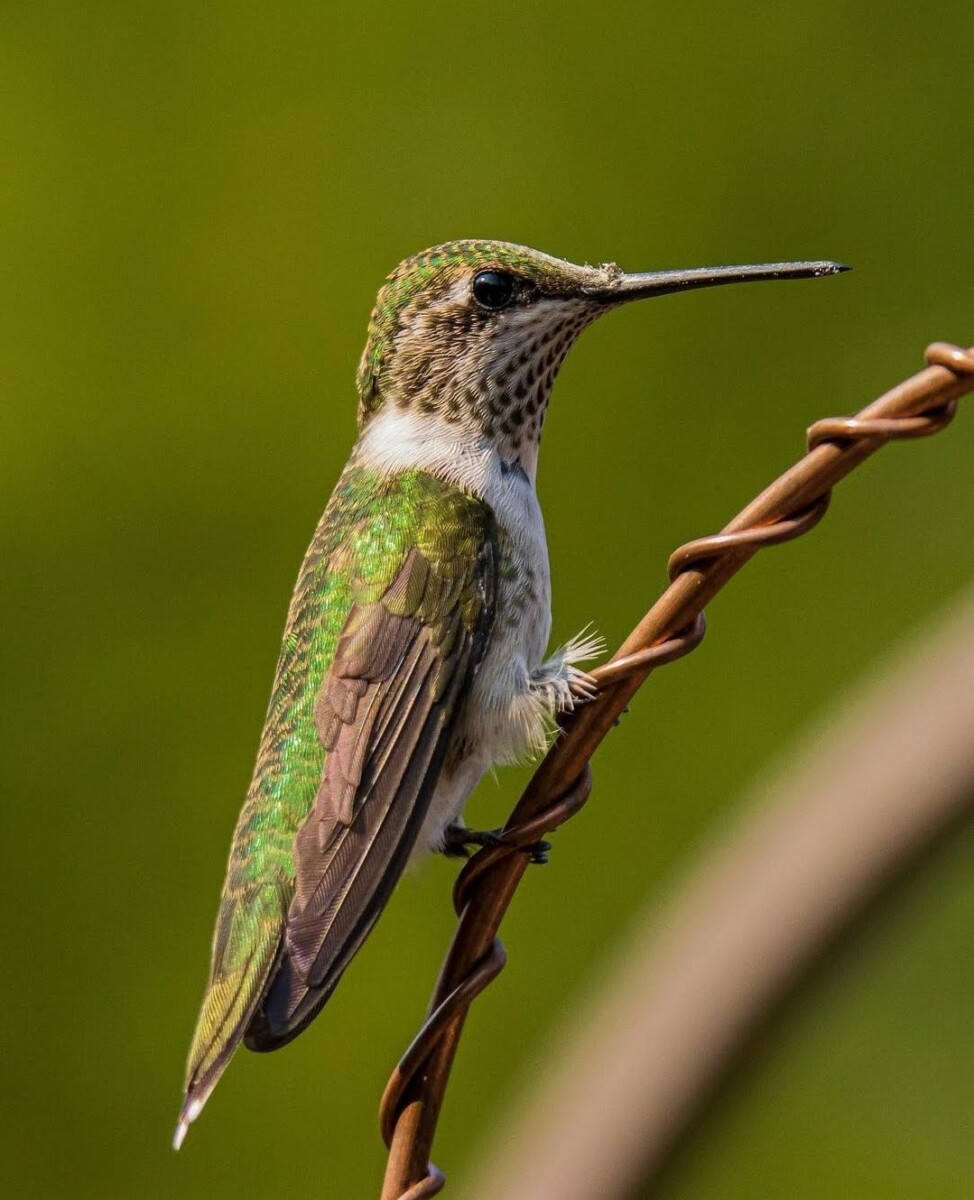
Photo by: MaryLou Ziebarth
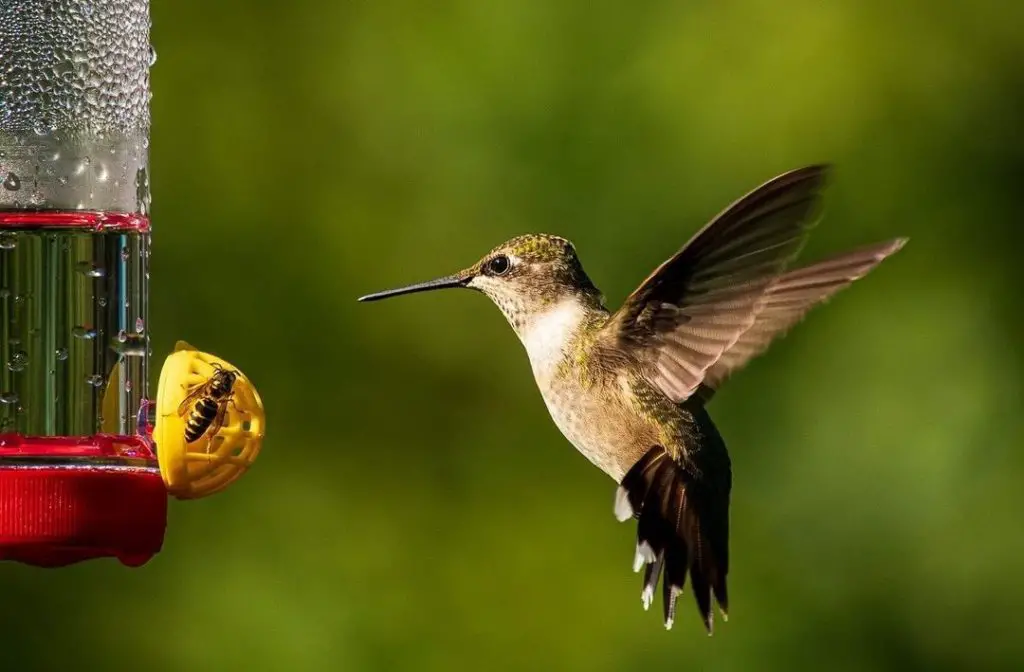
Photo by: MaryLou Ziebarth
Note: This juvenile Ruby-throated hummingbird is struggling with a bee or wasp situation at the feeder.
See my article: Bees On My Hummingbird Feeder: (9 Tips To Get Rid of Them)
Baby Ruby-throated hummingbirds:
Baby Ruby-throated hummingbirds are easily identified by their undertail coverts, which are white fluffy feathers near their bottom that will disappear as they age.
See my article: Baby Hummingbirds: (Egg to Fledgling)
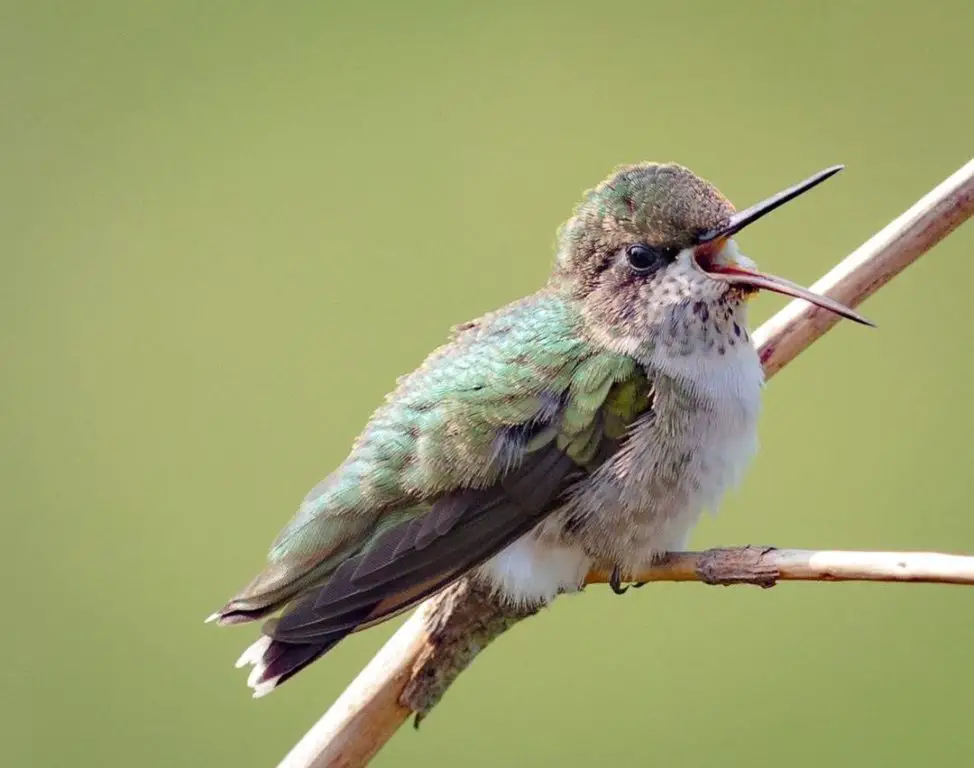
Photo by: Rekha Pawar
Note: The down feathers near the baby’s bottom are newly white and fluffy.
Observe the great fat reserves they have amassed from the feedings of their devoted mother’s, which will help them get through puberty.
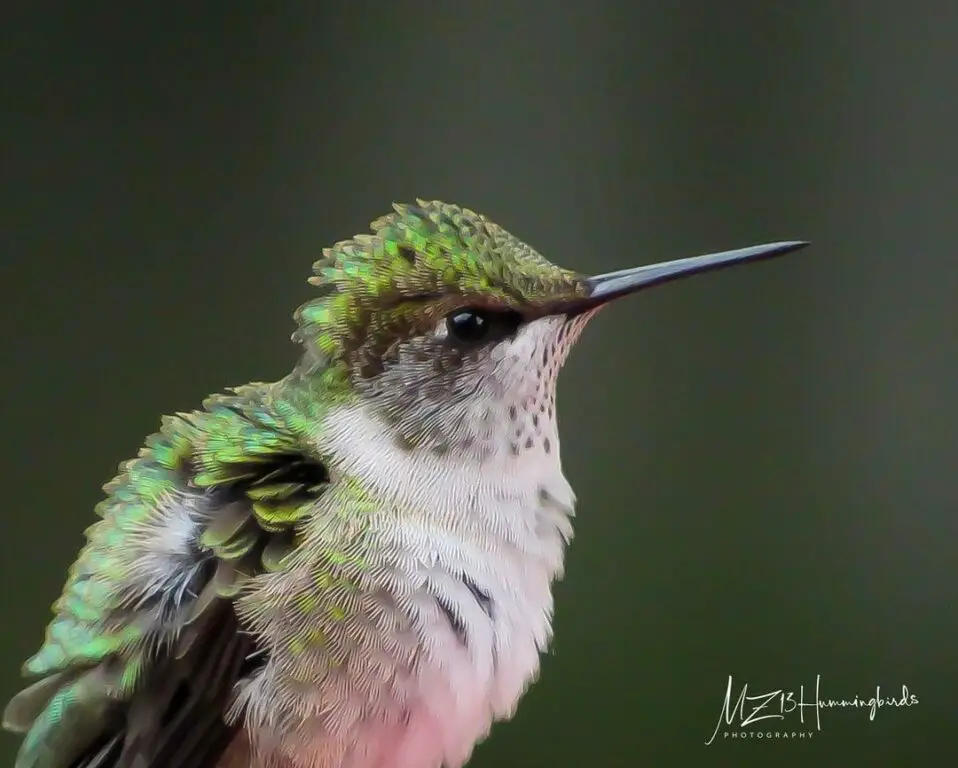
Photo by: Mz13hummingbirds
To see the current sighting map of Maryland’s Ruby-throated hummingbirds, click the link.
Hear the sounds of the Ruby-throated hummingbird (Cornell Lab of Ornithology link).
98% of all Maryland hummingbird sightings will be Ruby-throated hummingbirds.
On average, out of 10,000 hummingbird sightings in Maryland, 9,873 will be of the Ruby-throated hummingbird.
The Ruby-throated hummingbird migrates via two different routes in the spring and fall.
The first migration route takes them directly, via the Gulf of Mexico, southwest to Mexico, where they travel nonstop until they reach Central America for the winter.
Over 500 miles is the flight distance over the Gulf of Mexico. Despite being the direct “short” route, these birds must overcome many difficulties.
The total direct flight from Baltimore, Maryland to Panama City, Panama is 2,094 miles.
Not being able to rest, not having access to food or fuel, and needing to steer clear of the severe tropical Atlantic hurricanes while traveling to their destination are some of the challenges faced when flying over the Gulf of Mexico. To exacerbate the situation, they migrate during the night or are conducting a “Red-eye flight,” depending on your point of view.
Even though both sexes double their body fat before beginning their arduous transoceanic migratory pattern across the Gulf of Mexico, researchers think that males’ energy consumption is more taxing due to their small stature.
The second land migration path is 4,266 miles long and follows the Gulf of Mexico’s shoreline. Even though there are fewer guarantees of food sources along the way, taking the “long” route gives them the chance to stop and replenish.
Scientists are unclear and continue to investigate why one group of birds would prefer to take one route over the other.
Read my article: Hummingbird Migration in Maryland
The majority of people are unaware of how tolerant hummingbirds are of chilly weather.
According to eBird.org, through branding practices in Wisconsin, the Ruby-throated and Rufous hummingbirds have been documented surviving in temperatures of -9F and wind chills of -36F.
Read my article: 3 Reasons Why Hummingbirds Are Banded
To provide the hummingbirds that spend the winter in Maryland access to life-sustaining nectar, several Maryland hummingbird enthusiasts keep their hummingbird feeders up all winter long.
This altruistic deed also supplies nectar to other migrating species that are too injured or elderly to travel.
Read my article: 11 DIY Ways to Keep Hummingbird Nectar From Freezing
The Ruby-throated hummingbird is a common sight in parks, gardens, and backyards. It prefers open forests. Except for the breeding season, when they become ferociously territorial and hostile against hummingbirds of other species, they are solitary birds.
Despite their aggressive nature, these hummingbirds are eaten by predators like dragonflies, big crustaceans, praying mantises, and orb-weaver spiders.
Read my article: 10 Common Things That Kill Hummingbirds
Nine years and one month was the oldest known living female Ruby-throated hummingbird, found during a capture and release banding operation in West Virginia.
Read my article: 3 Reasons Why Hummingbirds Are Banded
Maryland Hummingbirds That Are Rare/Vagrant
There are six Maryland hummingbirds classified as rare or vagrant hummingbirds. They are the Rufous, Calliope, Black-chinned, Allen’s, Mexican Violetear and Anna’s hummingbirds.
Hummingbirds that live in a group outside of their typical geographic range are classified as belonging to this category. These hummingbird species not only span a vast range of distinct geographic areas, but they are also known to occasionally interbreed, giving rise to hybrids.
Although they are not in their usual range, reports of seeing these hummingbirds in Maryland have been made.
To see a current sighting map of Maryland rare/vagrant hummingbirds, click the links below:
RUFOUS HUMMINGBIRD – (Selasphorus rufus)
Conservation Status: Near threatened
Kingdom: Animalia
Phylum: Chordata
Class: Aves
Order: Apodiformes
Family: Trochilidae
Genus: Selasphorus
Species: S. rufous
The Latin word rubrum, which means “red,” is the source of the Rufous hummingbird’s name due to its reddish-brown color.
Male Rufous hummingbirds:
The orange-red gorget of a male rufous hummingbird is iridescent, and their tail and sides have a rusty hue. Their underside is beige to white, and their bill is black.
Along with chocolate brown dorsal feathers, males can also have green plumage with green spots on their rustic-looking backs or on the summit of their heads.
They weigh 3.2 grams and range in length from 2.8 to 3.5 inches.
The metal plate that shields the wearer’s throat during combat to prevent injuries is the inspiration behind the name of the gorget on a male hummingbird.
This name is acceptable and fitting to characterize the physical characteristics of male hummingbirds, since they fight fiercely for their own territory.
Read my article: Hummingbird Gorgets Explained
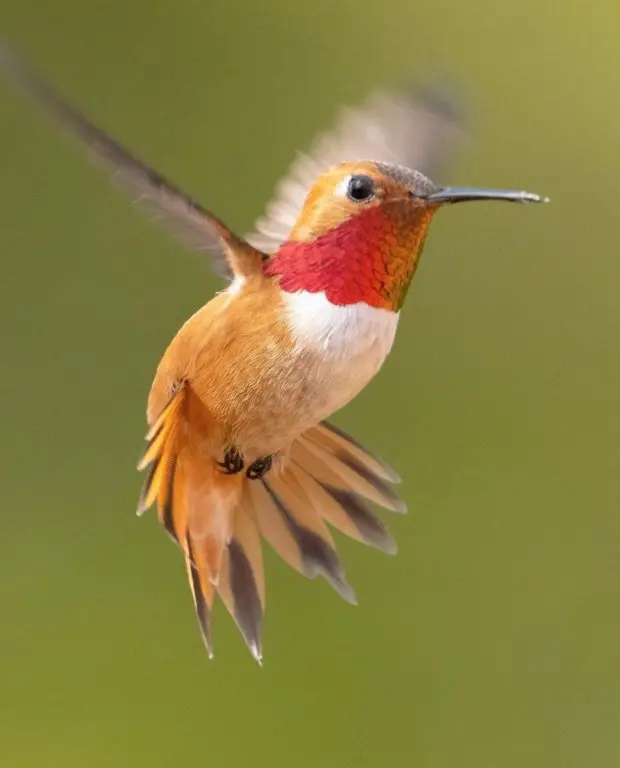
Note: The iridescent orange-red gorget.
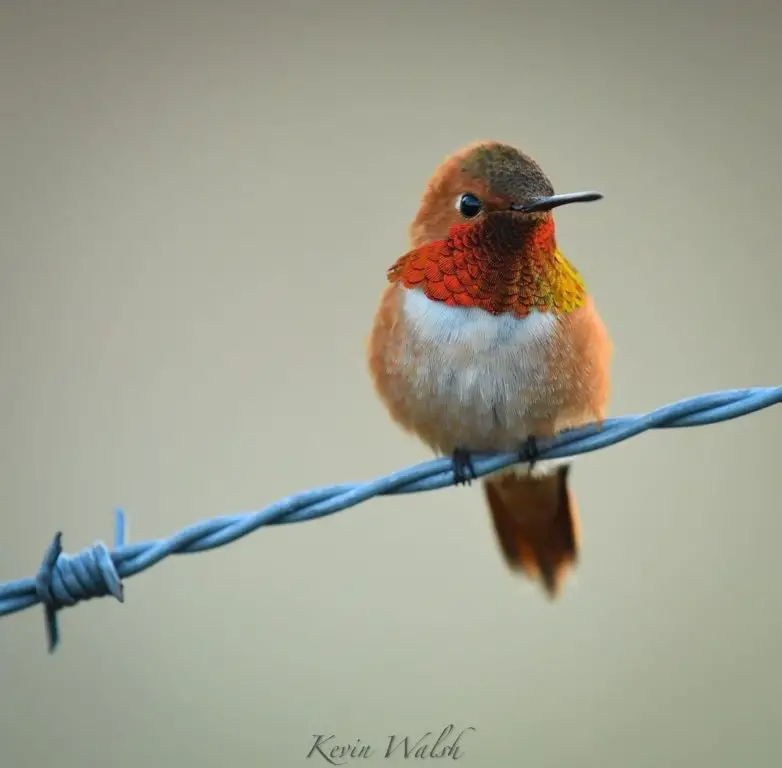
Photo by: Kevin Walsh
Female Rufous hummingbirds:
The female Rufous hummingbird is less colorful than the male because it lacks a gorget and iridescent feathers. In the wild, confusion may arise, though, because certain females have stippling or color specs along their throat line that resemble juvenile characteristics.
They are slightly larger than the males in anticipation of producing offspring.
See my article: Hummingbird Parents: (Mating to Nesting)
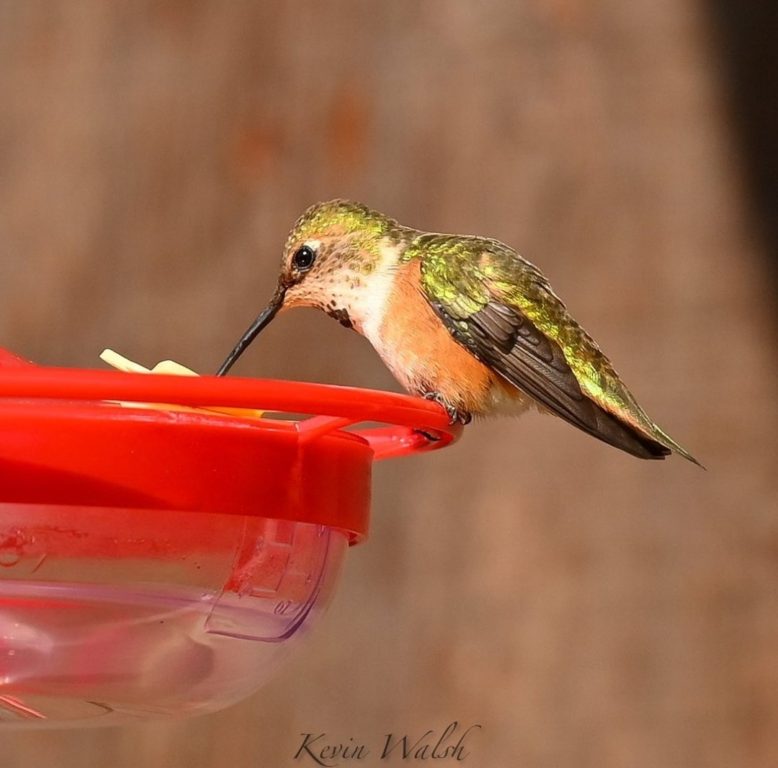
Photo by: Kevin Walsh
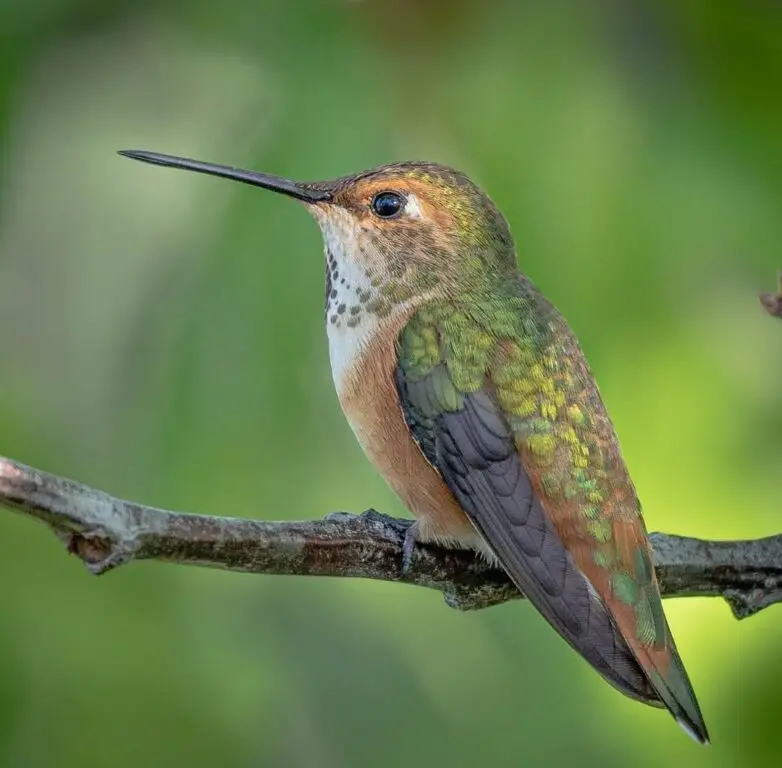
Photo by: Bob Free
They have one of the northernmost breeding ranges of any hummingbird in the world; migrating north from Mexico and nesting as far north as Alaska to breed during the summer months.
They are polygamous and will mate with several partners in a season.
Read my article: Hummingbird Parents: (Mating to Nesting)
Read my article: Baby Hummingbirds: (Egg to Fledgling)
Juvenile Rufous hummingbirds:
In the wild, juvenile Rufous hummingbirds and Allen’s hummingbirds are nearly identical in terms of color and behavior. Therefore, range rather than appearance is used to establish identity.
The juvenile male Rufous’ rustic appearance is attributed to the iridescent orange dots on their neck.
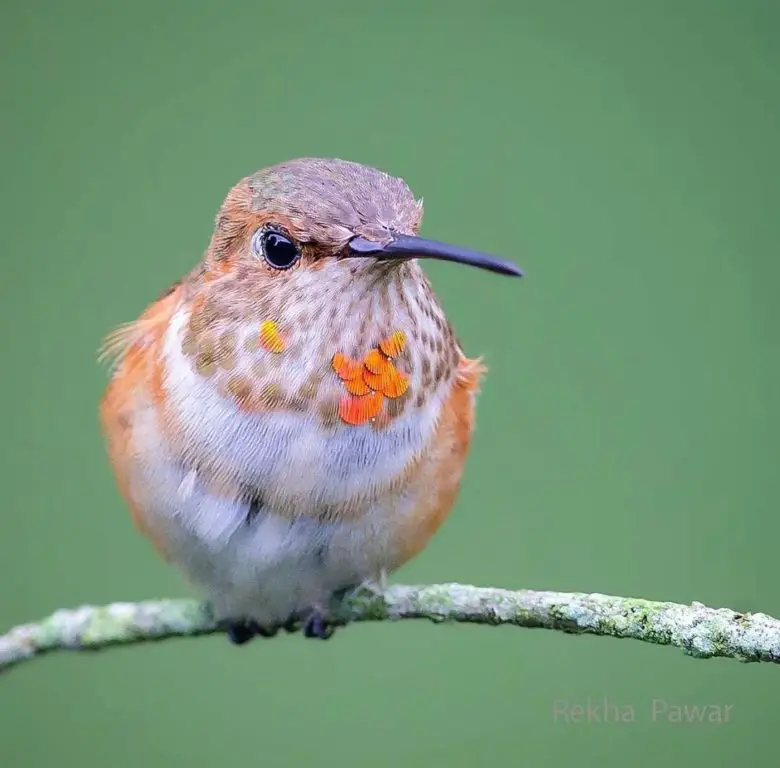
Note: The throat feathers are slowly coming in, displaying a few dots of color near his neckline and showing the first stages of adolescence.
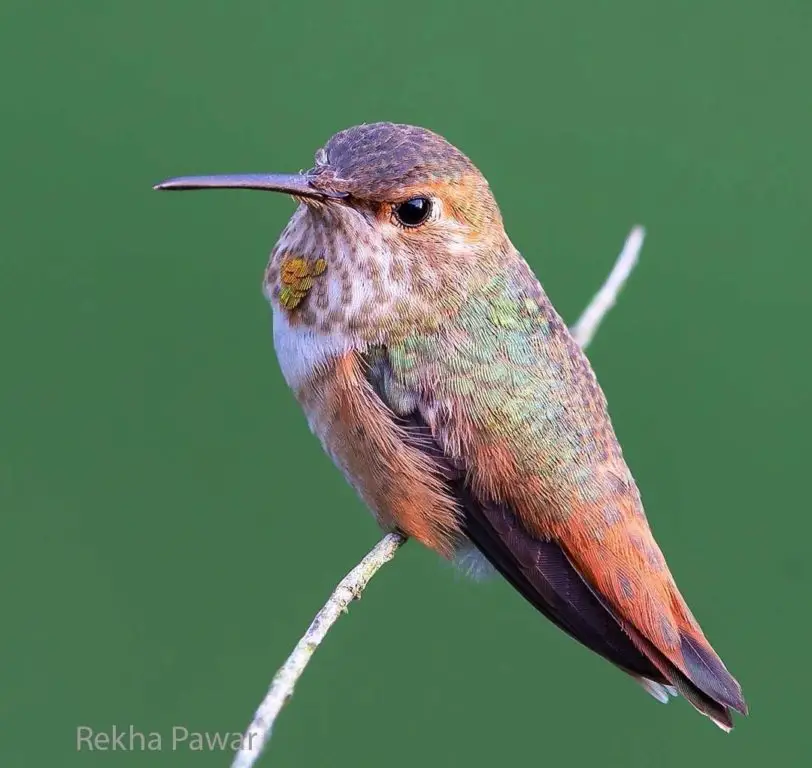
Photo by: Rekha Pawar
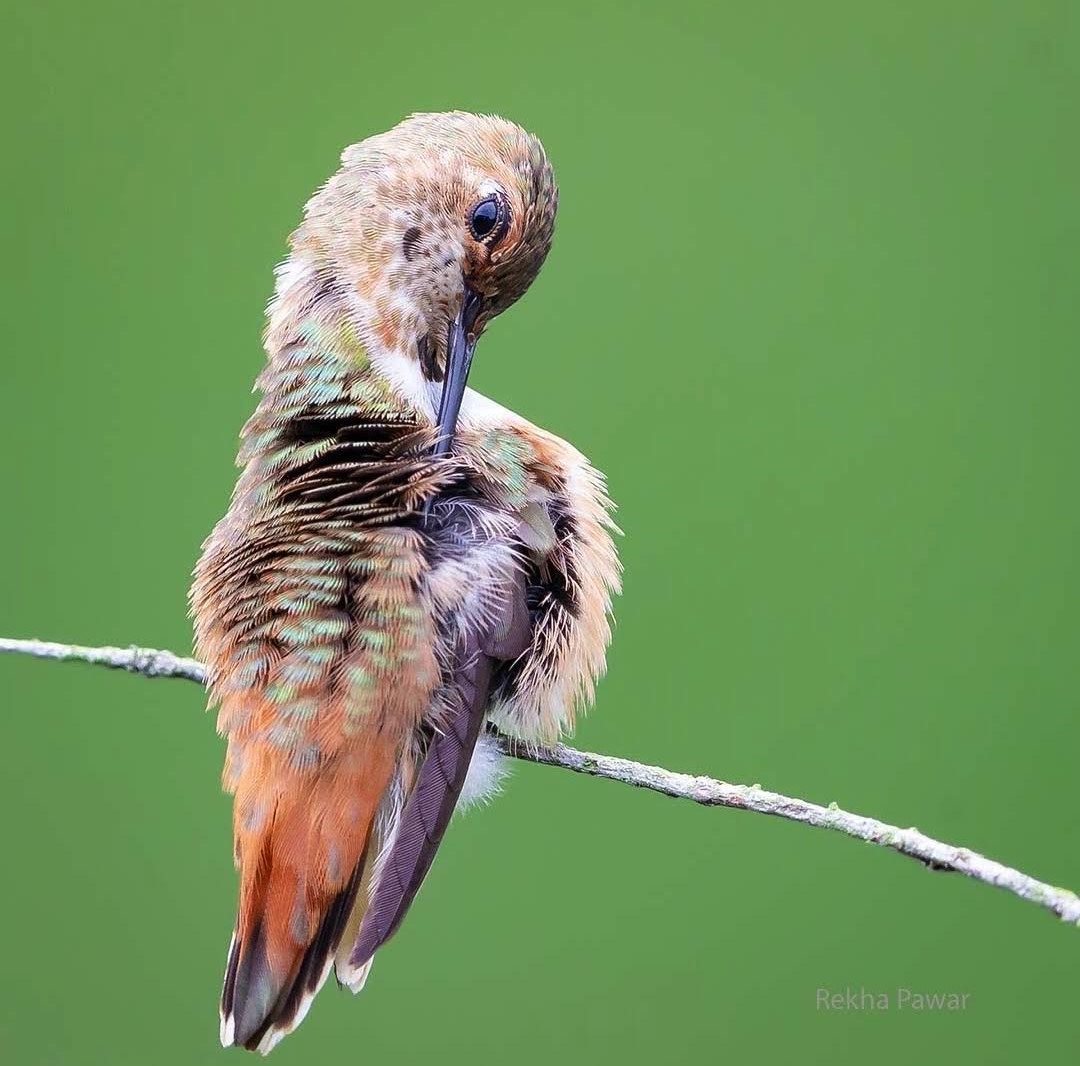
Photo by: Rekha Pawar
Note: Preening flight feathers is an important daily routine to maintain hygiene and to keep the feathers flexible, strong, in alignment, and parasite-free.
Baby Rufous hummingbirds:
Baby Rufous hummingbirds are easily identified by their undertail coverts, which are white fluffy feathers near their bottom that will disappear as they age.
See my article: Baby Hummingbirds: (Egg to Fledgling)
To see the current sighting map of Rufous hummingbirds in Maryland, click the link.
Hear the sounds of the Rufous hummingbird (Cornell Lab of Ornithology link).
0.91% of all Maryland hummingbird sightings will be Rufous hummingbirds.
On average, out of 10,000 hummingbird sightings in Maryland 91 will be the Rufous hummingbird.
Of all the birds in the world, Rufous hummingbirds migrate within the United States for the longest period of time. Every year, they traverse 3,900 miles in a clockwise manner around western America.
This migratory pattern during the seasons coordinates their arrival perfectly while catching nectar and blooming flowers throughout the year, fueling their bodies for their long journey.
In order to support a healthy migration, hummingbird enthusiasts are very beneficial when they cultivate blooming plants to draw hummingbirds and supply feeders with homemade hummingbird nectar. These friendly environments offer and guarantee safe trips in addition to a dependable haven for relaxation and refueling while on the road.
A large number of Rufous hummingbirds will choose to move south to Mexico rather than stay in Maryland for the winter. Hummingbirds, however, can withstand far lower temperatures than most people think.
According to eBird.org, through branding practices in Wisconsin, the Rufous and Ruby-throated hummingbirds are documented surviving in temperatures of -9F and wind chills of -36F.
See my article: 3 Reasons Why Hummingbirds Are Banded
Many Maryland hummingbird admirers leave hummingbird feeders up all winter long to provide life-nourishing nectar to the most commonly seen resident: the Rufous hummingbird.
This selfless act also provides nectar to other injured or older hummingbirds that are unable to migrate.
See my article: 11 DIY Ways to Keep Hummingbird Nectar From Freezing
When it comes to other hummingbirds and animals, Rufous hummingbirds are fiercely possessive and hostile. They are known for being aggressive and bold, driving large birds and rodents away from their favorite feeders in addition to other hummingbirds.
See my article: Why Hummingbirds Chase Each Other: Is it Friend or Foe?
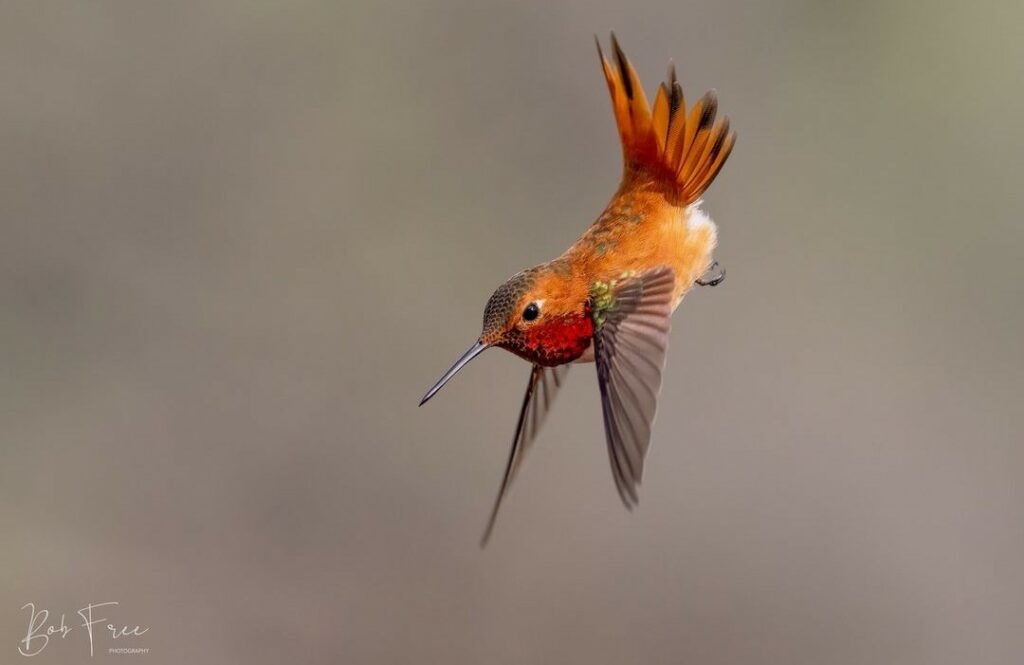
Photo by: Bob Free
It has even been observed that female mothers may attack squirrels and chipmunks that approach their nest too closely.
Due to their remarkable memory, Rufous hummingbirds have been observed to search for an abandoned hummingbird feeder years after it has been taken down.
Read my article: Hummingbird Adaptation and Remarkable Ability to Locate Food
Because of their unparalleled flying acrobatics, Rufous hummingbirds are fierce competitors at feeders, outmaneuvering all other species.
Rufous hummingbirds easily hybridize and cross-breed with other hummingbird species, such as Anna’s hummingbirds.
IUCN Red List classifies the Rufous hummingbird as “near threatened” because of habitat destruction in the Pacific Northwest.
In British Columbia, during a banding operation, the oldest living Rufous hummingbird was documented at 8 years and 10 months old.
Read my article: 3 Reasons Why Hummingbirds Are Banded
CALLIOPE HUMMINGBIRD – (Selasphorus calliope)
Conservation Status: Least concerned
Kingdom: Animalia
Phylum: Chordata
Class: Aves
Order: Apodiformes
Family: Trochilidae
Genus: Selasphorus
Species: S. calliope
Calliope hummingbirds are named after a Greek mythological muse, who represented poetry and eloquence. Calliope means “beautiful voice” in ancient Greek.
Male Calliope hummingbirds:
The long, stunning row of feathers that protrude down the sides of the throat and their iridescent purple cap are characteristics that make male Calliope hummingbirds clearly identifiable.
These hummingbirds, which are 3 inches long and weigh 2-3 grams, have shiny green backs like many others.
The metal plate that shields the wearer’s throat during combat to prevent injuries is the inspiration behind the name of the gorget on a male hummingbird.
This name is acceptable and fitting to characterize the physical characteristics of male hummingbirds, since they fight fiercely for their own territory.
Read my article: Hummingbird Gorgets Explained
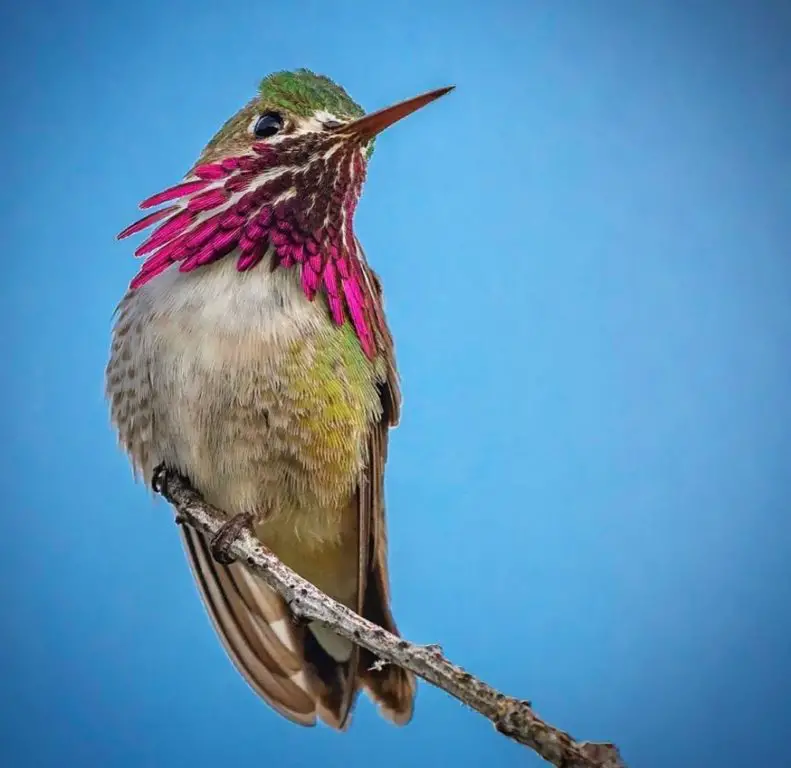
Photo by: sony_alpha_male
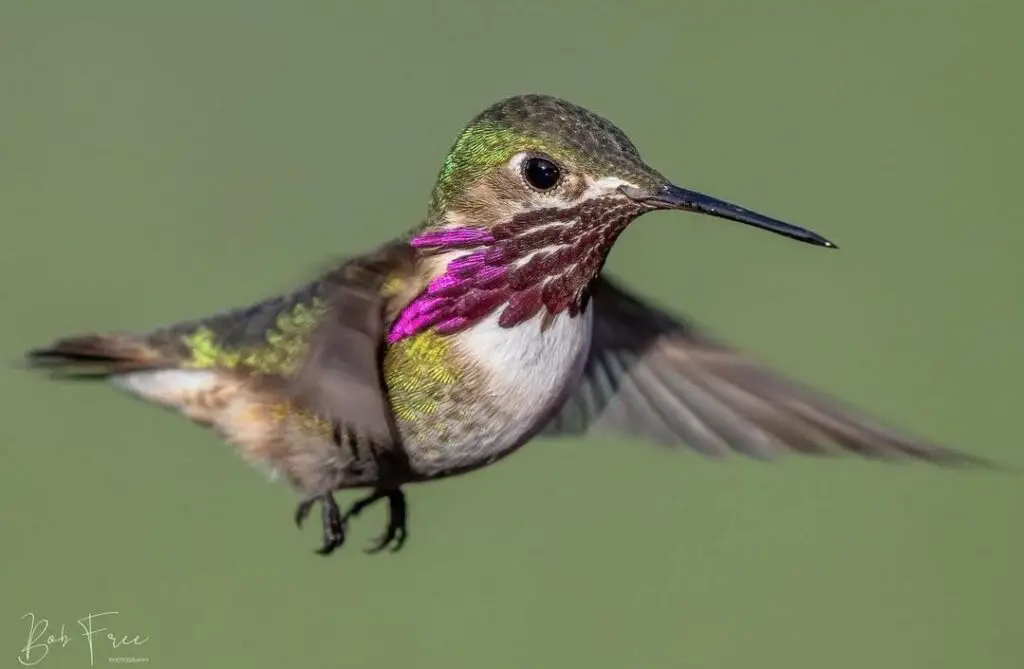
Photo by: Bob Free
Photo by: Bob Free
Female Calliope hummingbirds:
The female Calliope hummingbird is less colorful than the male and lacks a gorget and iridescent feathers. Their head’s crown, or top, has a grayish-green hue. The buff hue of the flanks refers to the sides, underbelly, and area beneath the wings.
See my article: Hummingbird Parents: (Mating to Nesting)
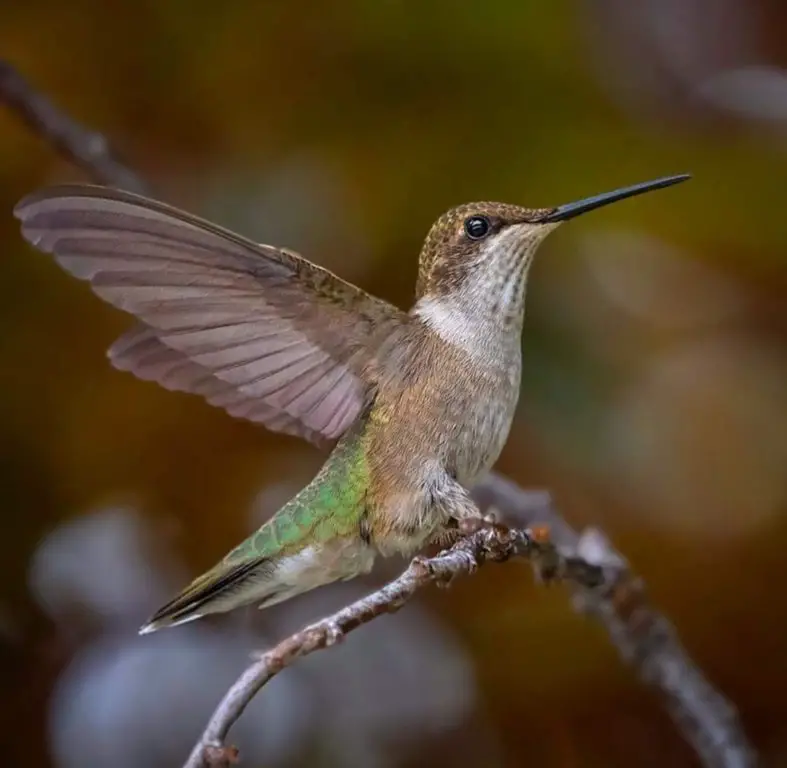
Photo by: sony_alpha_male
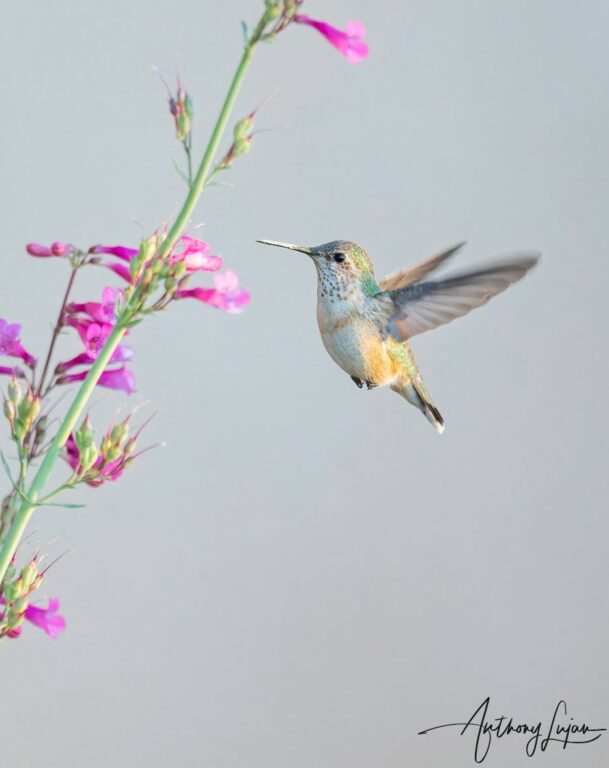
Photo by: Anthony Lujan
Photo by: Anthony Lujan
Juvenile Calliope hummingbirds:
Male and female juvenile Calliope hummingbirds initially resemble adult females until the male starts to develop the iridescent feathers that are characteristic of this species of hummingbird.
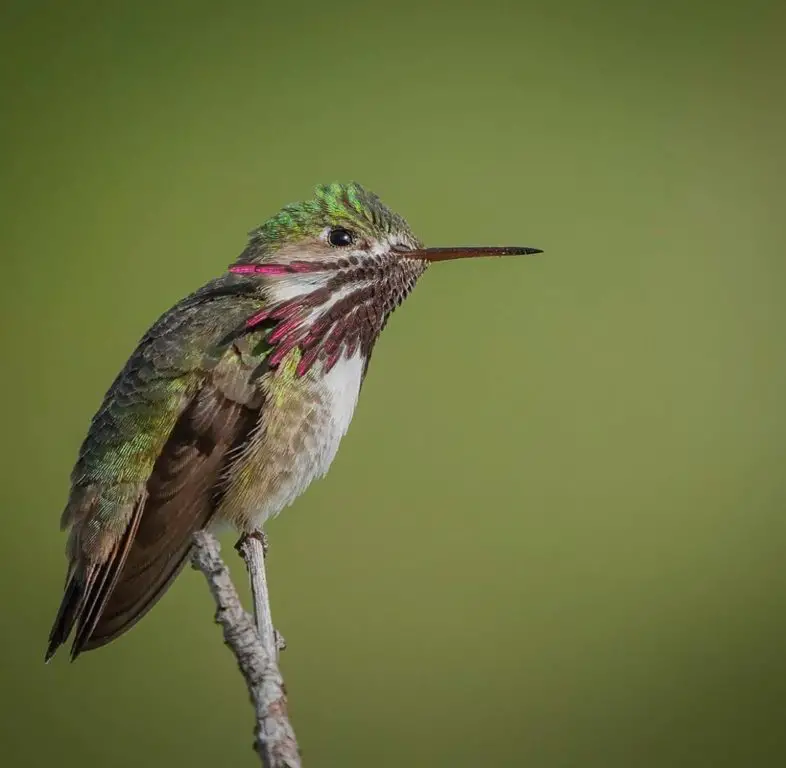
Photo by: sony_alpha_male
Note: His bright throat feathers are slowly coming in.
Baby Calliope hummingbirds:
Baby Calliope hummingbirds are easily identified by their undertail coverts, which are white fluffy feathers near their bottom that will disappear as they age.
See my article: Baby Hummingbirds: (Egg to Fledgling)
To see the current sighting map of the Calliope hummingbird in Maryland, click the link.
Hear the sounds of the Calliope hummingbird (Cornell Lab of Ornithology link).
0.22% of all Maryland hummingbird sightings will be Calliope hummingbirds.
On average, out of 10,000 hummingbird sightings in Maryland, only 22 will be the Calliope hummingbird.
Like many other hummingbirds, Calliopes use their feathers to manipulate their flight path in order to produce a variety of buzzing noises that serve as a type of language.
The male will fervently fly back and forth and perform a “U” shaped courtship display to get the attention of the female when she is quietly perched. The male hummingbird will perform a vocal serenade for the female while swaying his body back and forth in front of her.
See my article: Hummingbird Dance: 5 Interpretive Explanations
A breeding area is established by male Calliope hummingbirds, who mate with any female that accepts their wooing.
In terms of social behavior, Calliope hummingbirds are generally solitary, especially outside of the breeding season. They are territorial, with males often defending prime feeding territories from other hummingbirds.
See my article: Why Hummingbirds Chase Each Other: Is it Friend or Foe?
The world’s smallest long-distance migratory bird is the Calliope hummingbird. Their springtime migration patterns resemble those of Rufous hummingbirds.
Throughout their northward spring migration where they breed, they traverse the Pacific Flyways. On their southbound journey in the fall, they pass through the Pacific and Rocky Mountain Flyways towards their wintering destination in Mexico.
During the breeding season, female Calliope hummingbirds select the tips of pine cones as her building site for her nest. Along with stealing materials from other birds’ nests to build her own, she will also disassemble and recycle previous seasons’ nests.
Therefore, larger and more aggressive hummingbirds, such as Allen’s and Rufous hummingbirds, frequently chase and attack female Calliopes. Compared to other species, the Calliope keeps a low profile in order to evade these attacks.
Calliope hummingbirds hybridize and readily crossbreed with other hummingbird species, such as the Costa’s hummingbird.
Calliope hummingbirds are especially susceptible to habitat loss and natural catastrophes like wildfires and climate change because they have a smaller wintering range than other hummingbird species.
The oldest known female Calliope hummingbird was twice captured during a 2007 and 2014 banding operation in Idaho. She was 8 years and 11 months old at the time of her capture.
See my article: 3 Reasons Why Hummingbirds Are Banded
BLACK-CHINNED HUMMINGBIRD – (Archilochus alexandri)
Conservation Status: Least concerned
Kingdom: Animalia
Phylum: Chordata
Class: Aves
Order: Apodiformes
Family: Trochilidae
Genus: Archilochus
Species: A. alexandri
The Black-chinned hummingbird’s scientific name is in commemoration of Dr. Alexandre, a French doctor who was the first to discover the species in Mexico.
Male Black-chinned hummingbirds:
The royal purple gorget resembling a buttoned-up shirt with a small flash of color right near the neckline is the distinguishing feature of male Black-chinned hummingbirds. The male’s purple gorget or throat in some lighting at times looks entirely black.
Their flanks and backs are metallic green, while their undersides are white. They have a black bill and a forked dark tail.
Their length ranges from 3.25 to 3.5 inches, and they weigh between 2.8 and 5.6 grams.
The metal plate that shields the wearer’s throat during combat to prevent injuries is the inspiration behind the name of the gorget on a male hummingbird.
This name is acceptable and fitting to characterize the physical characteristics of male hummingbirds, since they fight fiercely for their own territory.
Read my article: Hummingbird Gorgets Explained
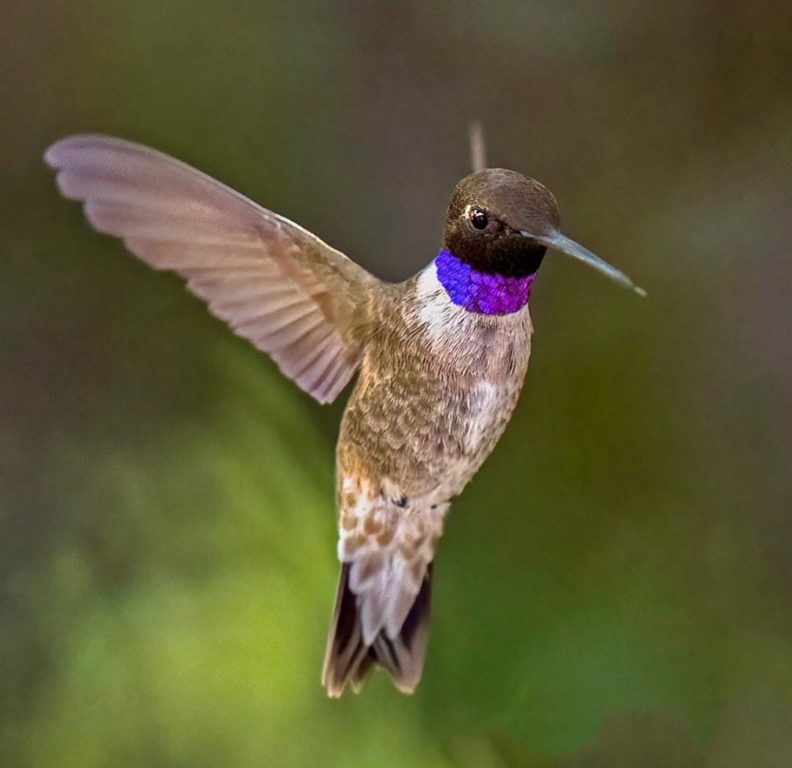
Photo by: sony_alpha_male
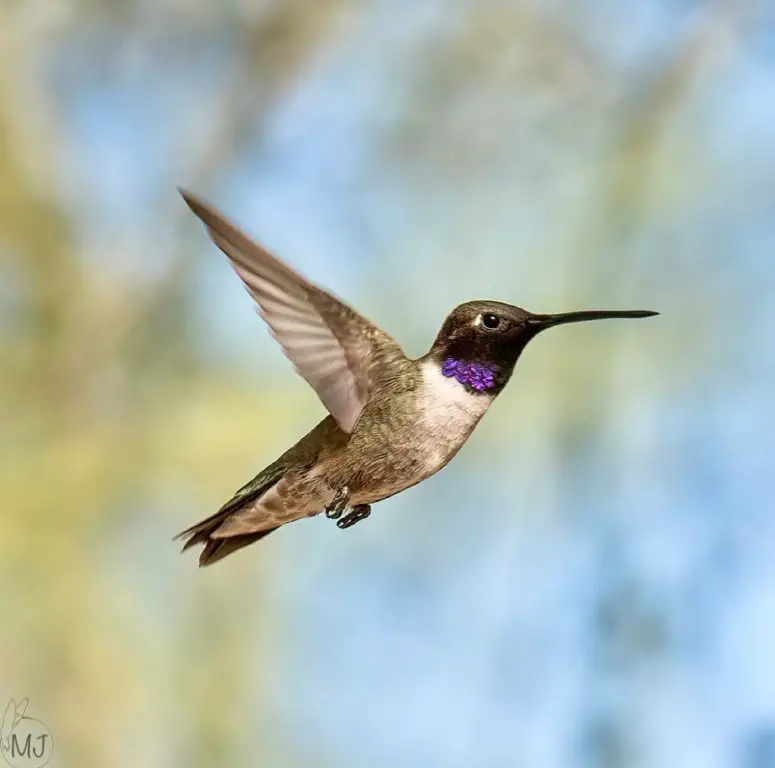
Photo by: hummingbirdsbysuprise
Female Black-chinned hummingbirds:
Compared to their male counterparts, female Black-chinned hummingbirds are less colorful and lack a gorget and iridescent feathers. White tips and beige edges on the dorsal feathers, which turn dark black as they age, adorn their dark, rounded tail, which has a white underbelly.
They have dull metallic marbled colors on their head and backs that resemble snake scales: beige, green, white, yellow-green, and dark brown.
Read my article: Hummingbird Parents: (Mating to Nesting)
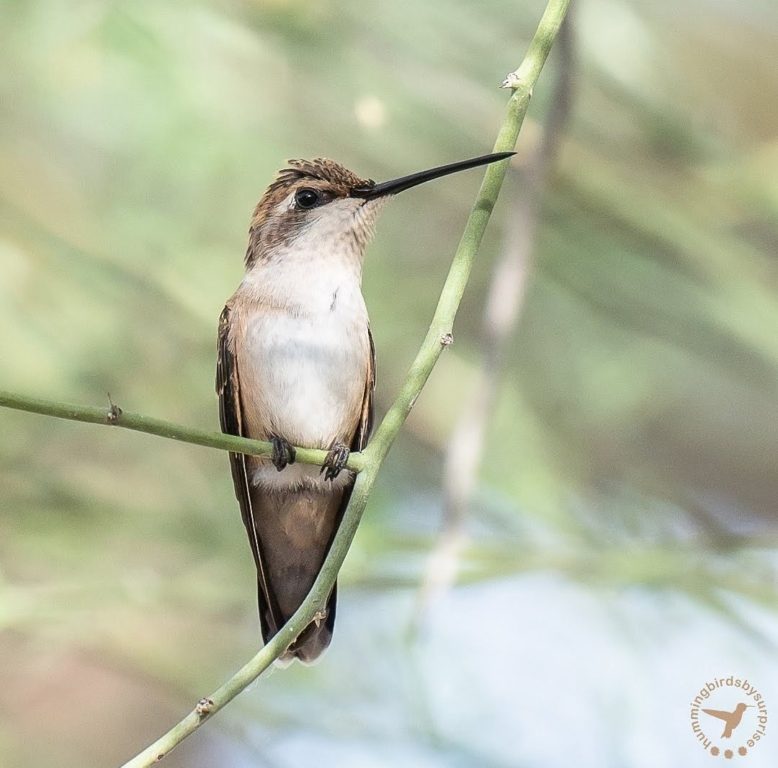
Photo by: hummingbirdsbysurpise
Juvenile Black-chinned hummingbirds:
Male and female juvenile Black-chinned hummingbirds initially resemble adult females until the male starts to develop the iridescent feathers that are characteristic of this species of hummingbird.
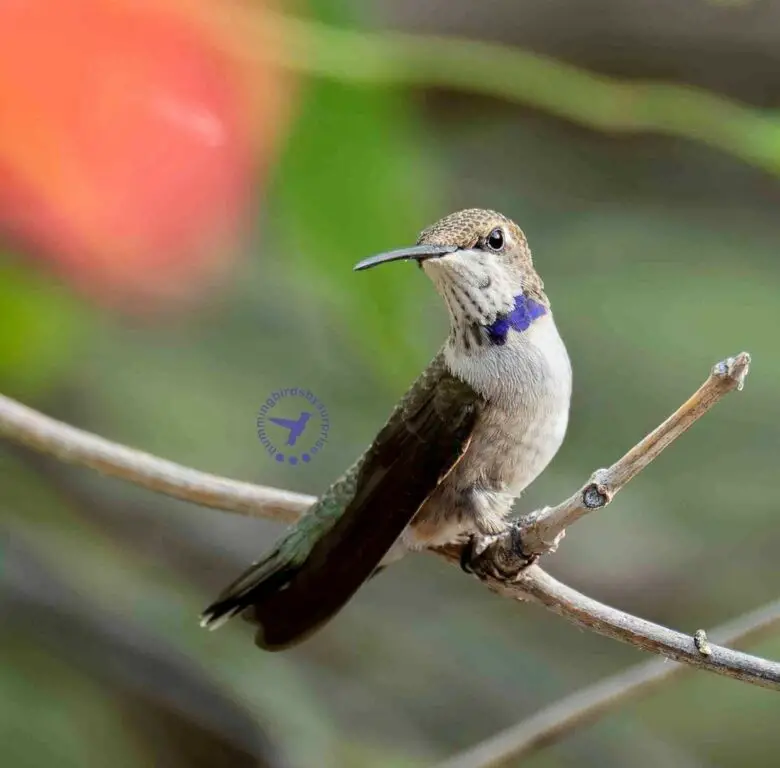
Photo by: hummingbirdsbysuprise
Baby Black-chinned hummingbirds:
Baby Black-chinned hummingbirds are easily identified by their undertail coverts, which are white fluffy feathers near their bottom that will disappear as they age.
See my article: Baby Hummingbirds: (Egg to Fledgling)
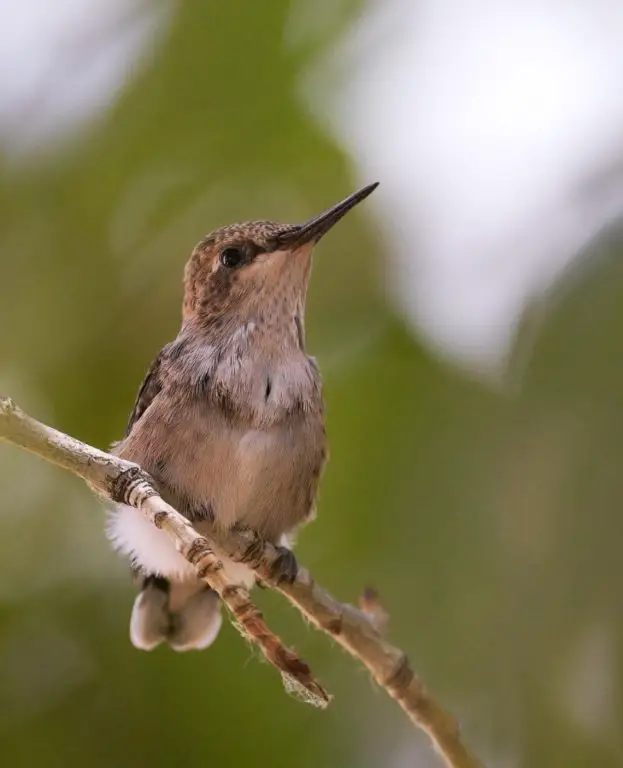
Photo by: bird.whisperer
To see the current sighting map of the Black-chinned hummingbird in Maryland, click the link.
Hear the sounds of the Black-chinned hummingbird (Cornell Lab of Ornithology link).
0.08% of all Maryland hummingbird sightings will be Black-chinned hummingbirds.
On average, out of 10,000 hummingbird sightings in Maryland, only 8 will be a Black-chinned hummingbird.
Black-chinned hummingbirds breed to the east of the Cascade mountain range. By employing a decoy tactic, they are known to build their nests close to larger, busier bird nests, hence decreasing the likelihood of predators nearby.
Of all extant mammals or vertebrates, Black-chinned hummingbirds have the least amount of genetic material known to science. Due to their little size, they run the risk of becoming prey for larger birds that consume insects.
See my article: 10 Common Things That Kill Hummingbirds
Particularly while protecting “their” feeders, hummingbirds come across as the most ruthless sheriff in the area due to their intense territoriality. To defend nectar sources full of blooming plants that attract hummingbirds, they will engage in territorial conflicts.
Although Black-chinned hummingbirds are a territorial species, they will become less aggressive and learn to share if they happen to be in an area with a high hummingbird population and food sources.
See my article: Why Hummingbirds Chase Each Other: Is it Friend or Foe?
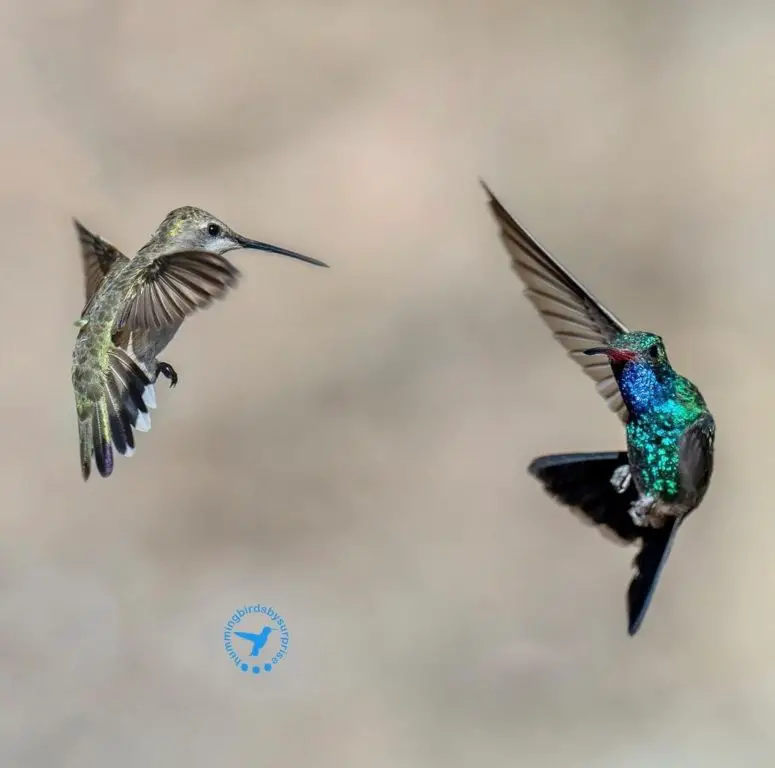
Photo by: hummingbirdsbysuprise
Black-chinned hummingbirds easily hybridize and interbreed with other hummingbird species, including Costa’s and Anna’s. The lifespan of a Black-chinned hummingbird is an astounding ten years, compared to other animals and birds of comparable size.
In Texas, during a banding and capture effort, the oldest known female Black-chinned hummingbird was 11 years and 2 months old.
See my article: 3 Reasons Why Hummingbirds Are Banded
ALLEN’S HUMMINGBIRD – (Selasphorus sasin)
Conservation Status: Least concerned
Kingdom: Animalia
Phylum: Chordata
Class: Aves
Order: Apodiformes
Family: Trochilidae
Genus: Selasphorus
Species: S. sasin
The scientific name of the Allen’s hummingbird is Selasphorus sasin.The common name of the Allen’s hummingbird is in commemoration of Charles Andrew Allen (1841-1930), an American collector and taxidermist.
Male Allen’s hummingbirds:
Male Allen’s hummingbirds are green-backed with a green forehead and rust-colored flanks, rump, and tail. When their tail feathers are fanned out you can see their chocolate-colored tips.
The gorget of the male Allen’s hummingbird is an iridescent orange-red, however, in darker lighting, it can appear chocolate brown.
Allen’s hummingbirds are 3.3 inches to 3.5 inches in length and weigh 2-4 grams.
The metal plate that shields the wearer’s throat during combat to prevent injuries is the inspiration behind the name of the gorget on a male hummingbird.
This name is acceptable and fitting to characterize the physical characteristics of male hummingbirds, since they fight fiercely for their own territory.
Read my article: Hummingbird Gorgets Explained
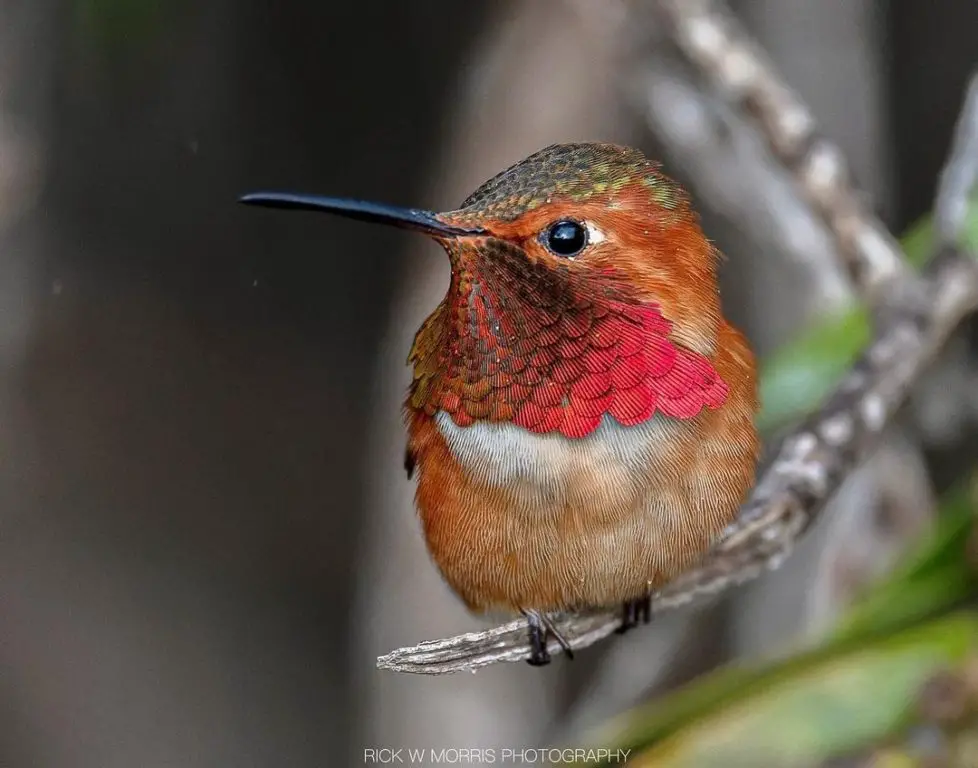
Photo by: IntheWildwithRick
Note: The iridescent orange-red gorget.
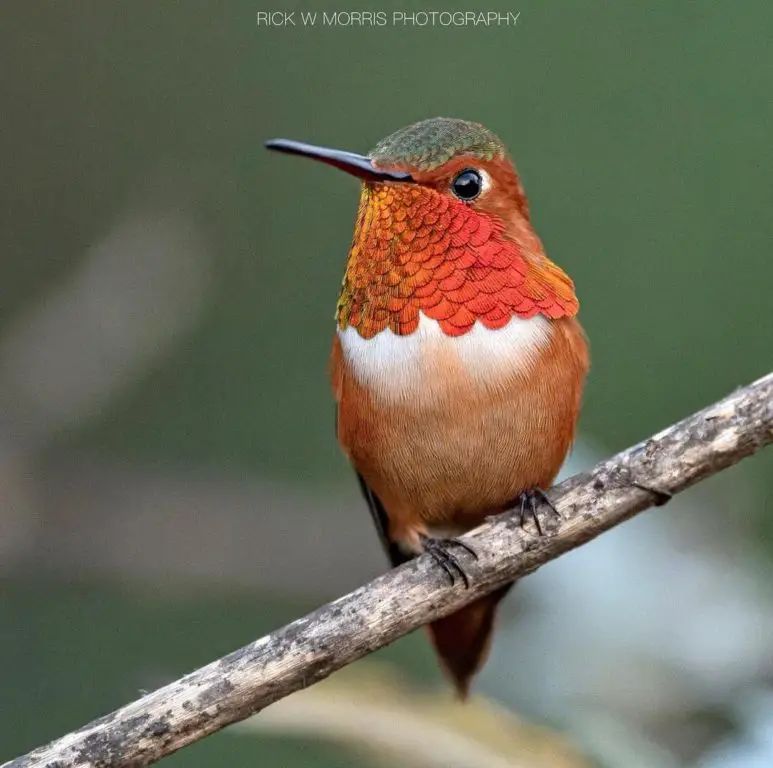
Photo by: IntheWildwithRick
Female Allen’s hummingbirds:
The female Allen’s hummingbird is less colorful than the male because it lacks the iridescent gorget. In the wild, confusion may arise because certain females have stippling or color specs along their throat lines that resemble juvenile characteristics.
See my article: Hummingbird Parents: (Mating to Nesting)
See my article: Baby Hummingbirds: (Egg to Fledgling)
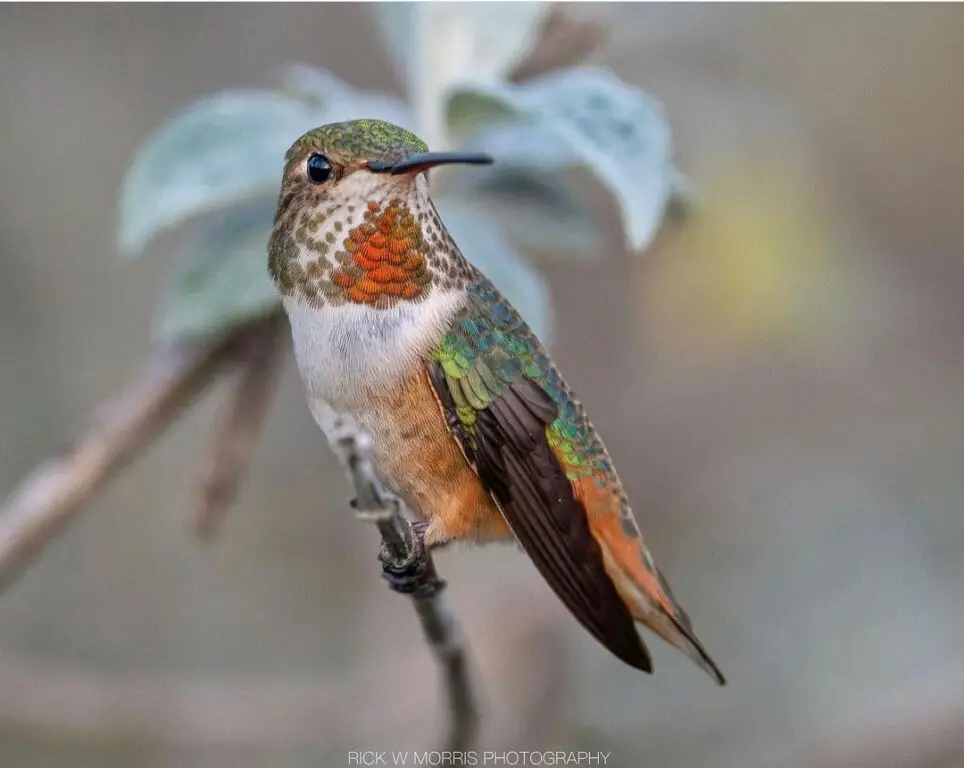
Photo by: IntheWildwithRick
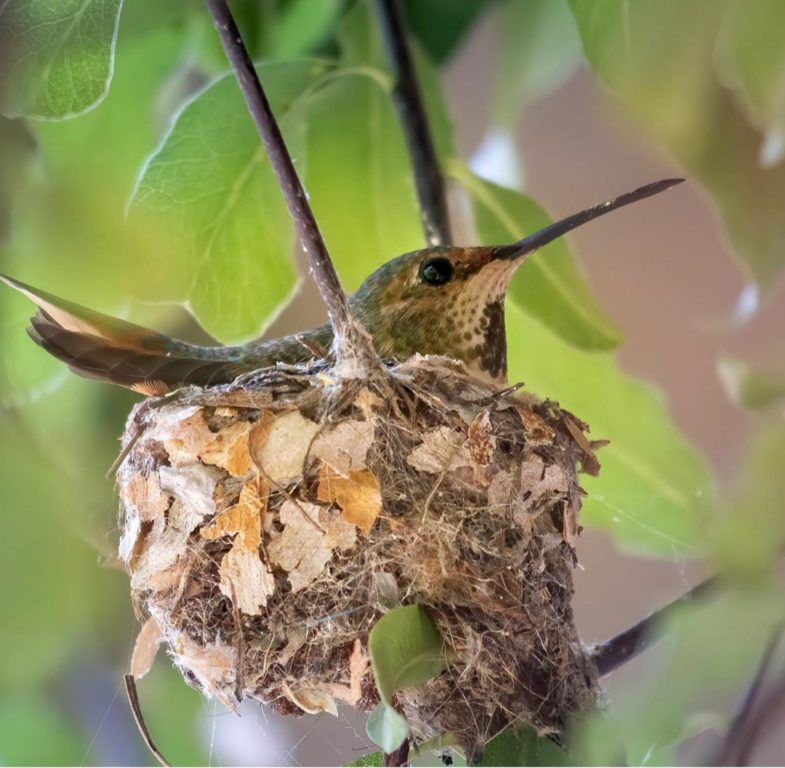
Photo by: Aaron Gomperts
Juvenile Allen’s hummingbirds:
Both male and female juvenile Allen’s hummingbirds first resemble adult females until the male starts to develop the characteristic iridescent feathers of this species of hummingbird.
In the field, they are nearly identical to Rufous hummingbirds due to their striking similarity in colors and disposition.
Therefore, range rather than appearance is used to establish identity.
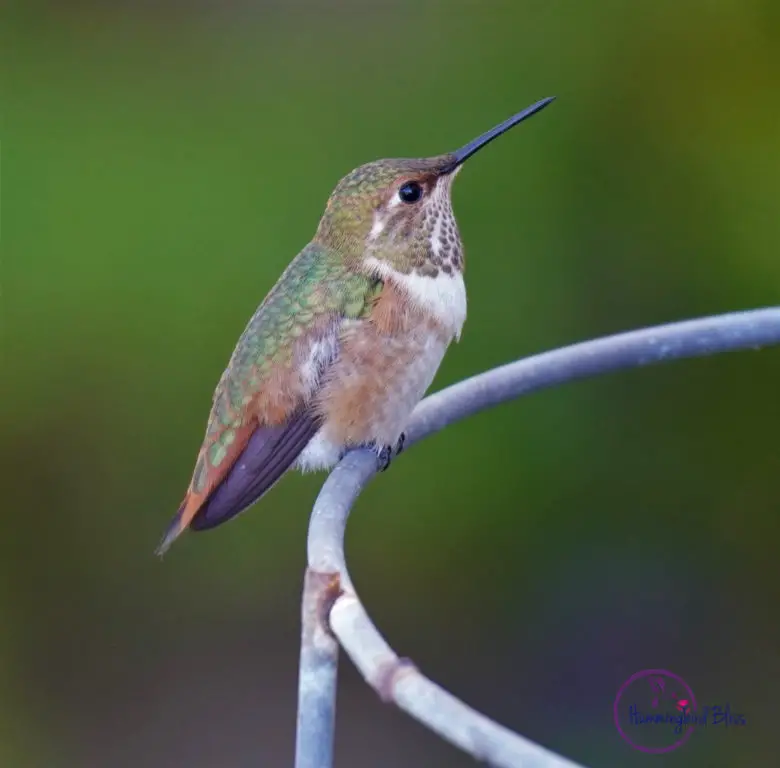
Note: This juvenile male Allen’s hummingbird is protecting a feeder while perching on a tomato cage.
You will see that he still has some stippling around his throat and some fluffy white down feathers near his bottom.
He appears to be in the early stages of adolescence because a full gorget has not yet developed.
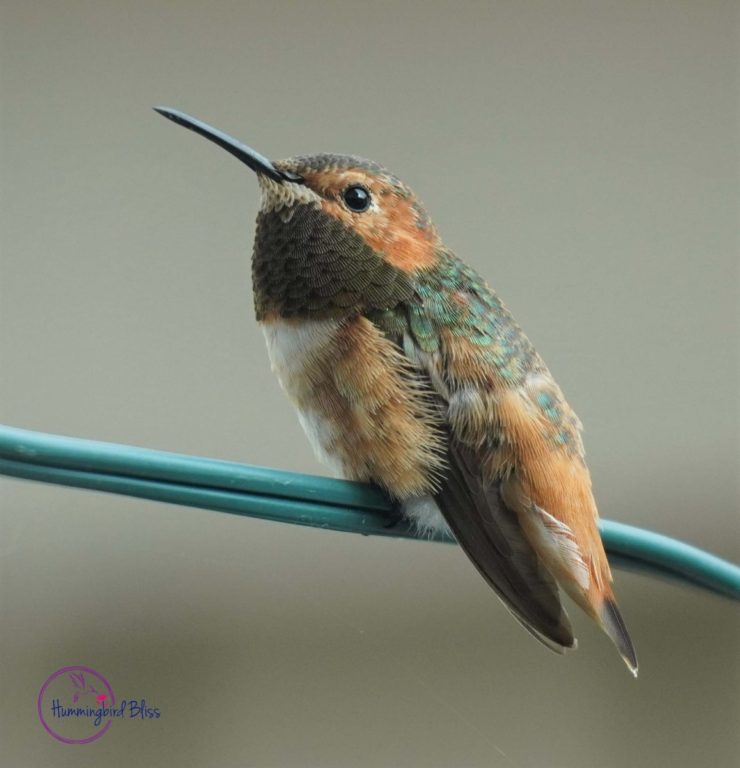
Note: Depending on the lighting, the gorget may appear chocolate brown.
Additionally, you will see that he still has some fluffy white down feathers near his bottom, indicating that he is in the latter stages of adolescence rather than being a fully grown adult.
Baby Allen’s hummingbirds:
Baby Allen’s hummingbirds are easily identified by their undertail coverts, which are white fluffy feathers near their bottom that will disappear as they age.
See my article: Baby Hummingbirds: (Egg to Fledgling)
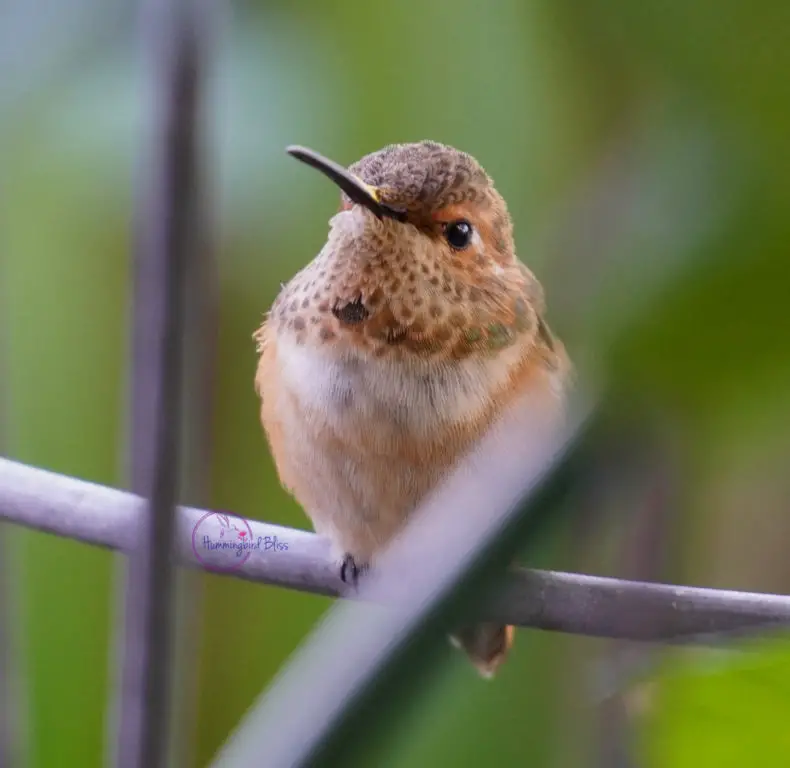
Note: On a tomato cage; hiding in a tomato plant near a feeder.
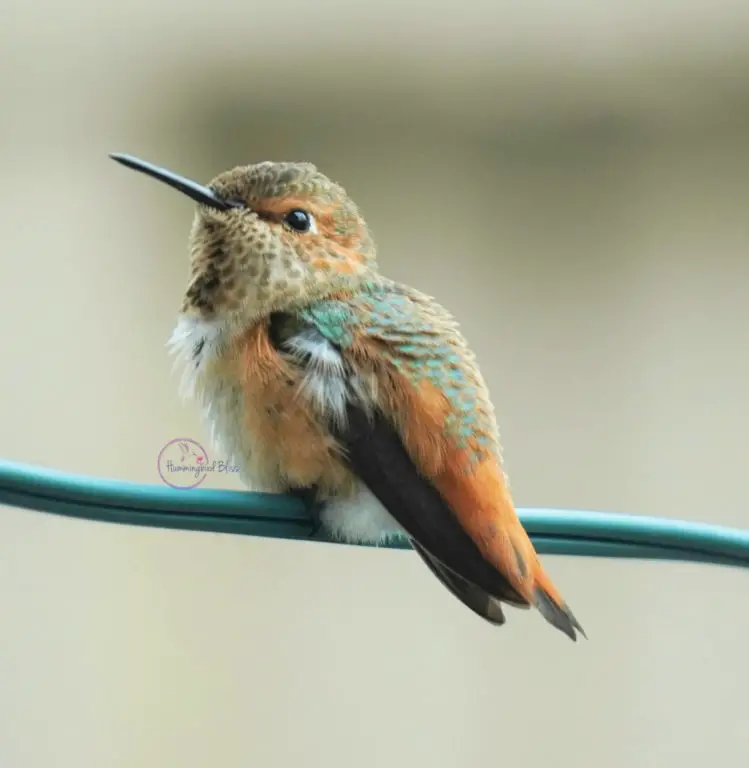
Note: He is guarding a neighboring feeder with diligence. Observe the developmental differences between the juvenile in the last shot on the tomato cage and the current photo on the outside light wire.
To see the current sighting map of Maryland’s Allen’s hummingbirds, click the link.
Hear the sounds of the Allen’s hummingbird (Cornell Lab of Ornithology link).
0.03% of all Maryland hummingbird sightings will be Allen’s hummingbirds.
On average, out of 10,000 hummingbird sightings in Maryland, only 3 will be of an Allen’s hummingbird.
Male Allen’s hummingbirds engage in a dramatic, fast-paced courtship dance that mimics a pendulum’s swing. Of all the hummingbirds in North America, their territorial dive displays are among the most intricate.
See my article: Hummingbird Dance: 5 Interpretive Explanations
Allen’s hummingbirds, both male and female, are gregarious birds. Other than mating, they do not interact with each other. Allen’s hummingbirds are fiercely territorial and hostile toward other hummingbirds as well as larger predatory birds like hawks, much like Rufous hummingbirds.
They are primarily found in coastal parts of California and Oregon, USA. They prefer habitats like gardens, forested or shrubby areas, and coastal chaparral. They migrate to southern Mexico in the winter, covering quite long distances for such small birds.
Allen’s hummingbirds are highly territorial, especially the males during the breeding season. They engage in aggressive aerial displays to defend their feeding territories from intruders. These displays include high-speed chases and intricate flight patterns.
See my article: Why Hummingbirds Chase Each Other: Is it Friend or Foe?
Allen’s hummingbirds commonly reside and nest along the west coast and winter in Mexico. Their nesting season is perfectly timed with when the regions have the most rainfall which helps provide prolific nectar producing flowers for their offspring.
Usually found in trees or shrubs, females use plant materials and spider webs to construct tiny, cup-shaped nests. Each time they attempt to reproduce, they lay one to two eggs, which they then incubate for two to three weeks.
For several weeks after hatching, the young remain totally reliant on their mother for nourishment and protection until they are able to fly.
In their natural range, Allen’s hummingbirds often visit gardens and areas with bird feeders. They are a favorite among bird watchers and nature enthusiasts for their colorful appearance and lively behavior.
The future of Allen’s hummingbirds, like many species, is closely tied to environmental factors and human influence on their habitats. Habitat loss and the use of pesticides are among the challenges they face. Efforts to preserve natural habitats, along with responsible gardening and the maintenance of bird feeders, aids in their conservation.
Understanding and protecting Allen’s hummingbirds is crucial for maintaining the ecological balance and for the continued enjoyment of future generations who will marvel at this vibrant and lively bird.
In 2004, and again in 2009, the oldest known living Allen’s hummingbird was taken during a California banding program that involved catch and release. She was 5 years and 11 months old at the time.
See my article: 3 Reasons Why Hummingbirds Are Banded
Mexican Violetear Hummingbirds:
MEXICAN VIOLETEAR (aka GREEN VIOLETEAR) HUMMINGBIRD – (Colibri thalassinus)
Conservation Status: Least concerned
Kingdom: Animalia
Phylum: Chordata
Class: Aves
Order: Apodiformes
Family: Trochilidae
Genus: Colibri
Species: C. thalassinus
Scientifically speaking, the Mexican Violetear is a species of hummingbird, Colibri thalassinus.
Thalassinus is a Latin term meaning “color of the sea.”
The characteristic violet patch of feathers on the sides of this hummingbird’s head, which mimics an ear, gave rise to its popular name.
The “violetear” description is accurate and vivid because of this bright patch that stands out against the bird’s otherwise green plumage.
Male Mexican Violetear hummingbirds:
The term “violet-ears” refers to the iridescent green color of male Mexican Violetear hummingbirds, which have brilliant violet ear patches on either side of their neck.
This hummingbird has metallic blue-green tail feathers with a black band underneath the bronze tail feathers in the center.
They weigh between 5 and 6 grams and have lengths ranging from 3.8 to 4.7 inches.
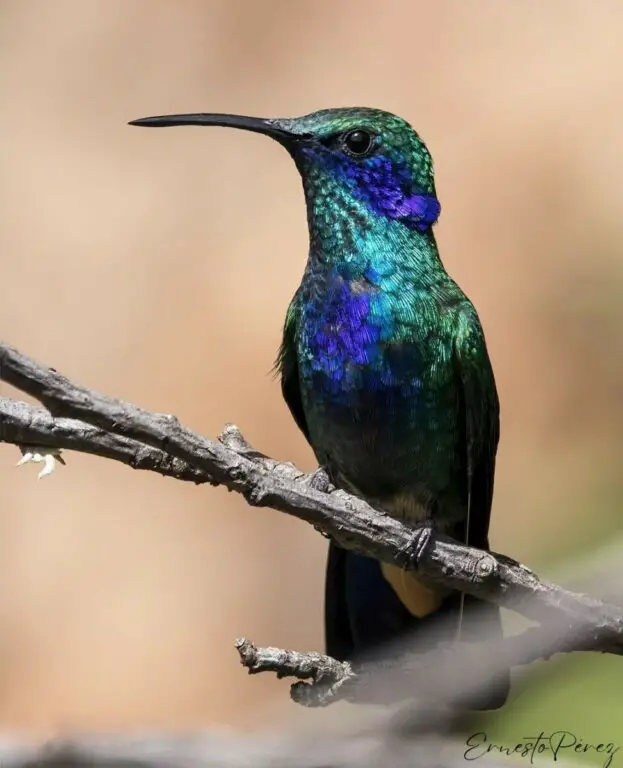
Photo by: Ernesto Perez
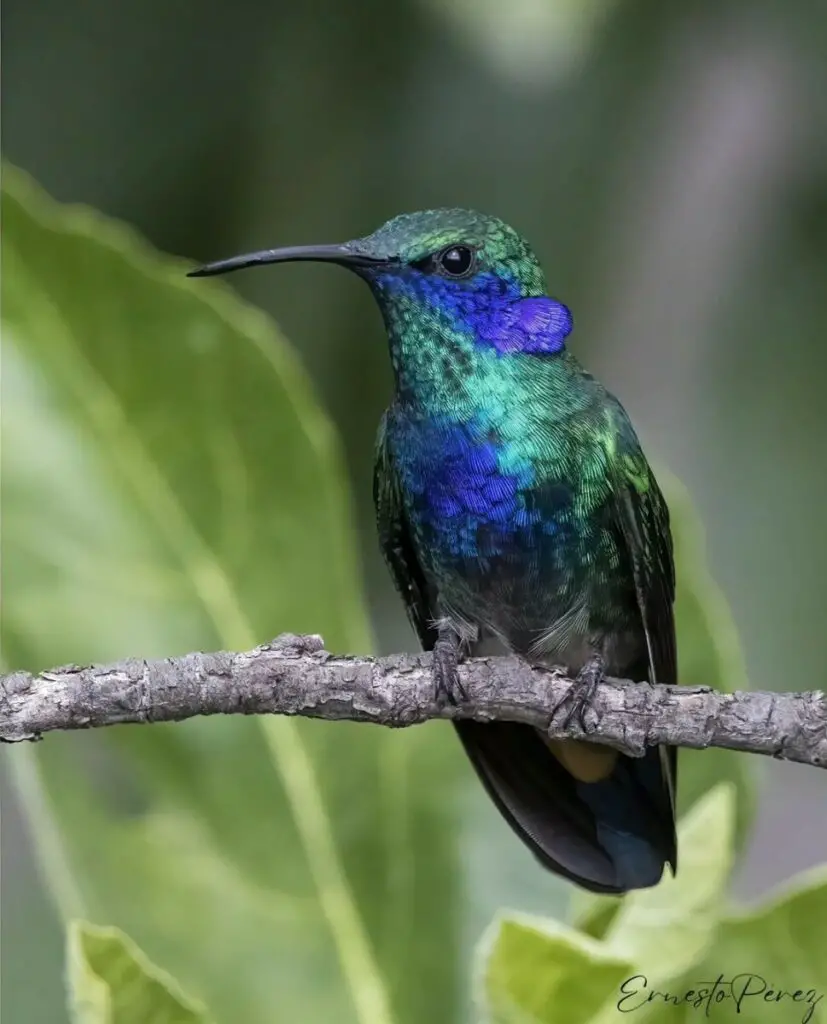
Photo by: Ernesto Perez
Female Mexican Violetear hummingbirds:
Females typically have a less vibrant coloration compared to males. They have a primarily green plumage, which can appear as a dull green or blue-green. The green is iridescent and may shine with different intensities and hues in various lighting conditions.
The violet ear patches are present in females but are often less pronounced than in males.
The underparts of the female are typically a duller green compared to the males, and they may have some grayish or whitish markings.
The tail is typically dark, forked, and has some blue or green iridescence. It is usually less spectacular than that of the male.
See my article: Hummingbird Parents: (Mating to Nesting)
Juvenile Mexican Violetear hummingbirds:
Male and female Mexican Violetear hummingbirds in their juvenile years resemble adult females until the male starts to develop the characteristic iridescent violet ear patches on either side of his neck.
Baby Mexican Violetear hummingbirds:
Baby Mexican Violetear hummingbirds are easily identified by their undertail coverts, which are white fluffy feathers near their bottom that will disappear as they age.
See my article: Baby Hummingbirds: (Egg to Fledgling)
To see the current sighting map of Maryland’s Mexican Violetear hummingbirds, click the link.
Hear the sounds of the Mexican Violetear hummingbird (Cornell Lab of Ornithology link).
0.03% of all Maryland hummingbird sightings will be a Mexican Violetear hummingbird.
On average, out of 10,000 hummingbird sightings in Maryland, only 3 will be of the Mexican Violetear hummingbird.
From Mexico to Nicaragua, these hummingbird species are found on the outskirts of cloud forests, where they thrive in an environment with high levels of tropical humidity. It is common to see this dark hummingbird at forest margins and clearings.
Mexican Violetear hummingbirds are semi-nomadic. Since they have not been thoroughly examined, scientists know very little about their migration patterns. However, based on available data, the Mexican Violetear is primarily distributed in northern South America, middle Mexico, and middle America.
Although Mexican Violetear hummingbirds are typically permanent residents of their natural habitat, a few individuals have strayed and ventured as far north as Wisconsin, Michigan, and even Canada.
Much like a lot of other hummingbird species, the Mexican Violetear hummingbird nests alone. Although they do not feed in flocks, these hummingbirds are observed in groups around flowering trees, such as the coffee-shading Inga tree, where they scavenge for nectar and insects.
In terms of social behavior, Mexican Violetear hummingbirds are generally solitary, especially outside of the breeding season. They can be territorial, with males often defending prime feeding territories from other hummingbirds.
See my article: Why Hummingbirds Chase Each Other: Is it Friend or Foe?
The oldest known Mexican Violetear hummingbird was documented to be at least 11 years and 2 months old.
This information is based on banding records, where birds are captured, banded with a unique identification ring, and then potentially recaptured or found in the future.
The age of this particular Mexican Violetear was determined by the length of time between its initial banding and its last documented recapture or sighting.
See my article: 3 Reasons Why Hummingbirds Are Banded
ANNA’S HUMMINGBIRD – (Calypte anna)
Conservation Status: Least concerned
Kingdom: Animalia
Phylum: Chordata
Class: Aves
Order: Apodiformes
Family: Trochilidae
Genus: Calypte
Species: C. anna
The Anna’s hummingbird, scientifically known as Calypte anna, gets its common name from Anna Masséna, the Duchess of Rivoli.
Male Anna’s hummingbirds:
In North America, male Anna’s hummingbirds are the only species of hummingbirds with a red crown. Their predominant colors are magenta, gray, and green.
The male gorget and crown are iridescent magenta, and they are very vivid and showy.
They weigh between 2.4 and 4.5 grams and have lengths ranging from 3.5 to 4.3 inches.
The metal plate that shields the wearer’s throat during combat to prevent injuries is the inspiration behind the name of the gorget on a male hummingbird.
This name is acceptable and fitting to characterize the physical characteristics of male hummingbirds, since they fight fiercely for their own territory.
Read my article: Hummingbird Gorgets Explained
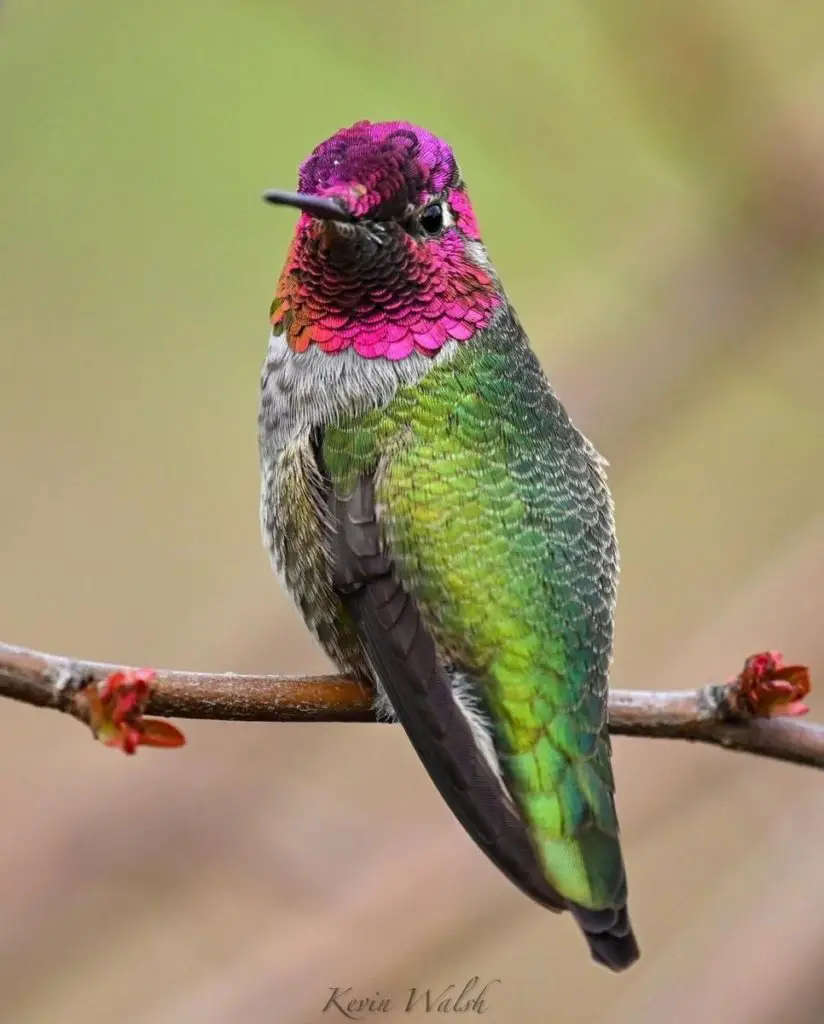
Photo by: Kevin Walsh
Note: The metallic green glossy back with iridescent magenta gorget and crown.
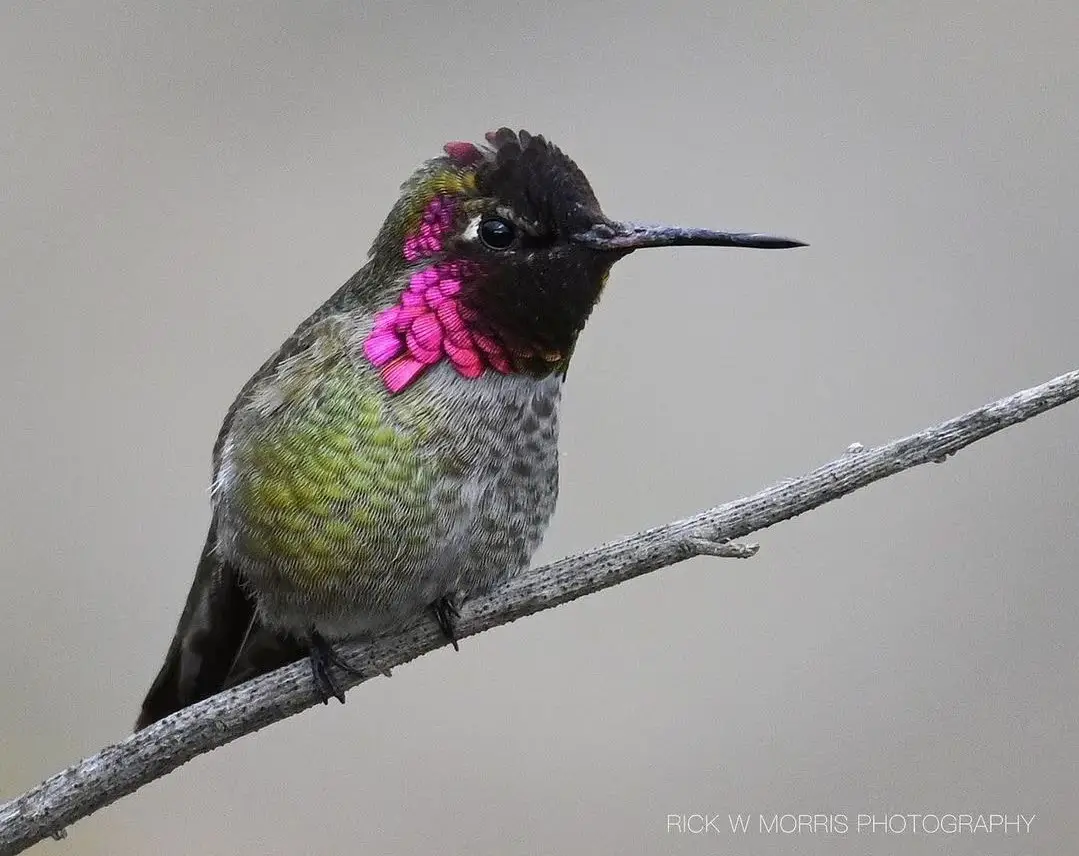
Photo by: IntheWildwithRick
Female Anna’s hummingbirds:
Female Anna’s hummingbirds are pale green in hue, not as brilliant as the males.
Although a showy gorget is more prevalent on the males, females can also have them, showing a tiny area of magenta.
Females are identified by the faint white line that usually covers each eye.
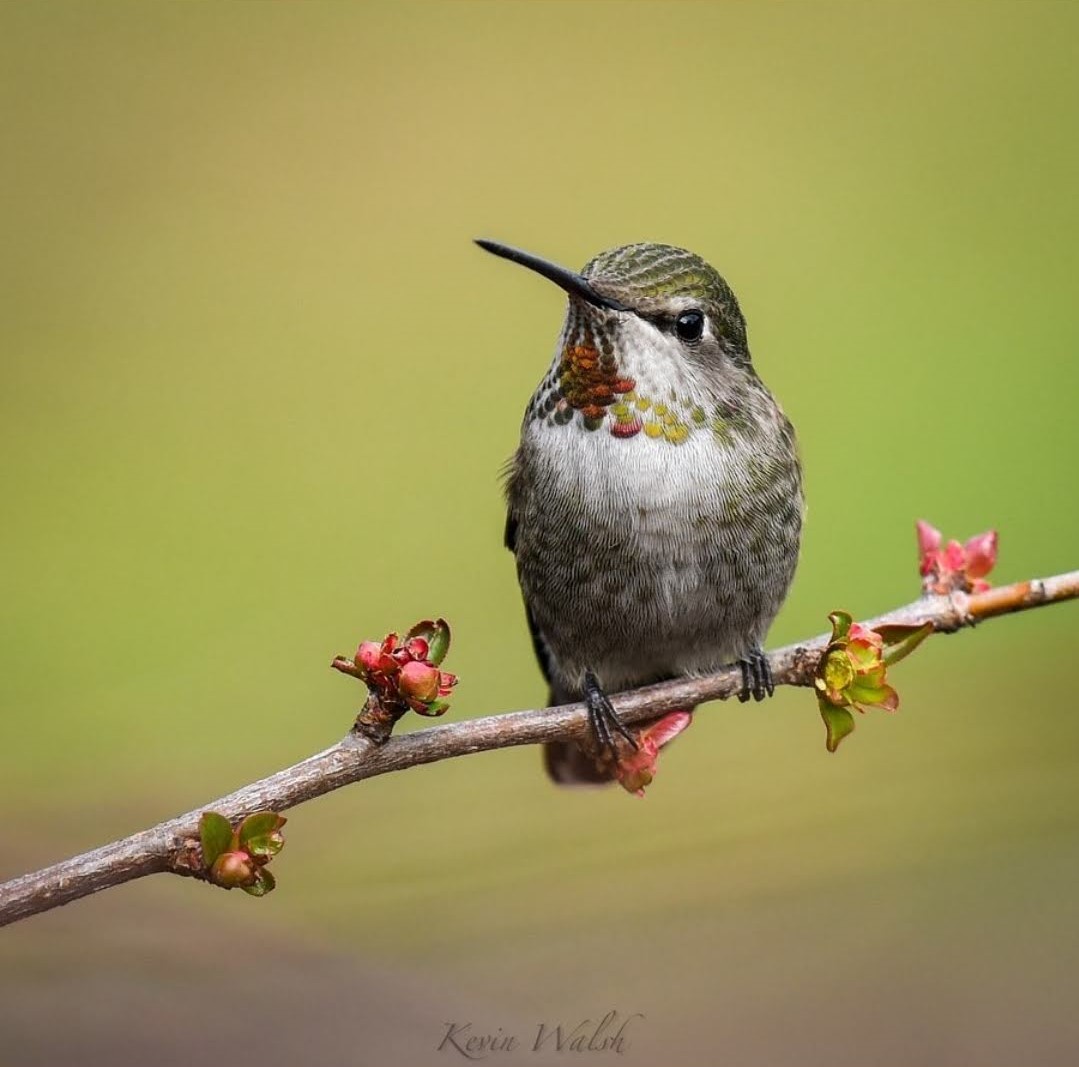
Photo by: Kevin Walsh
Note: The small patch of color on her gorget.
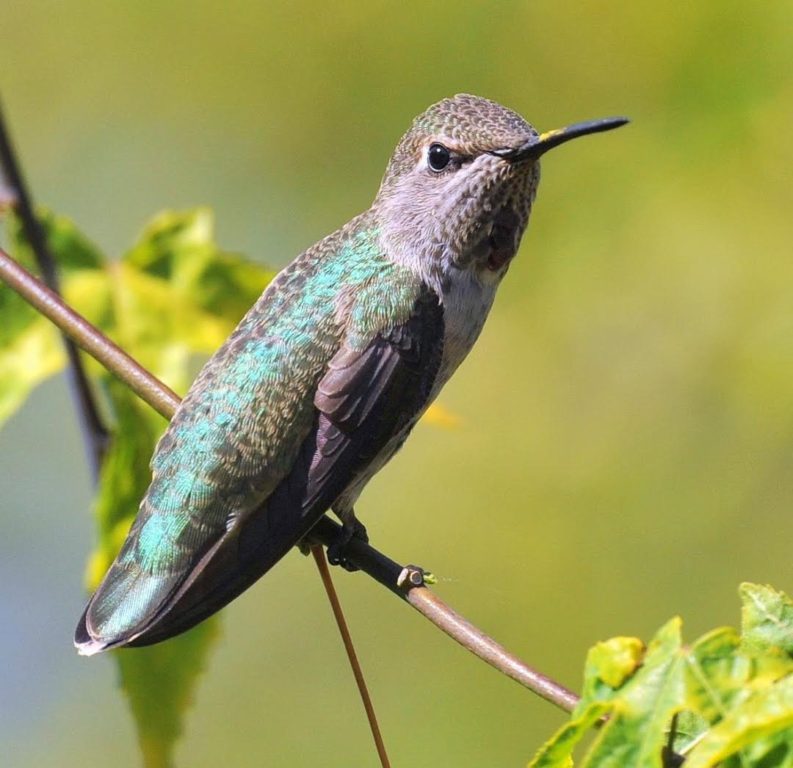
Photo by: IntheWildwithRick
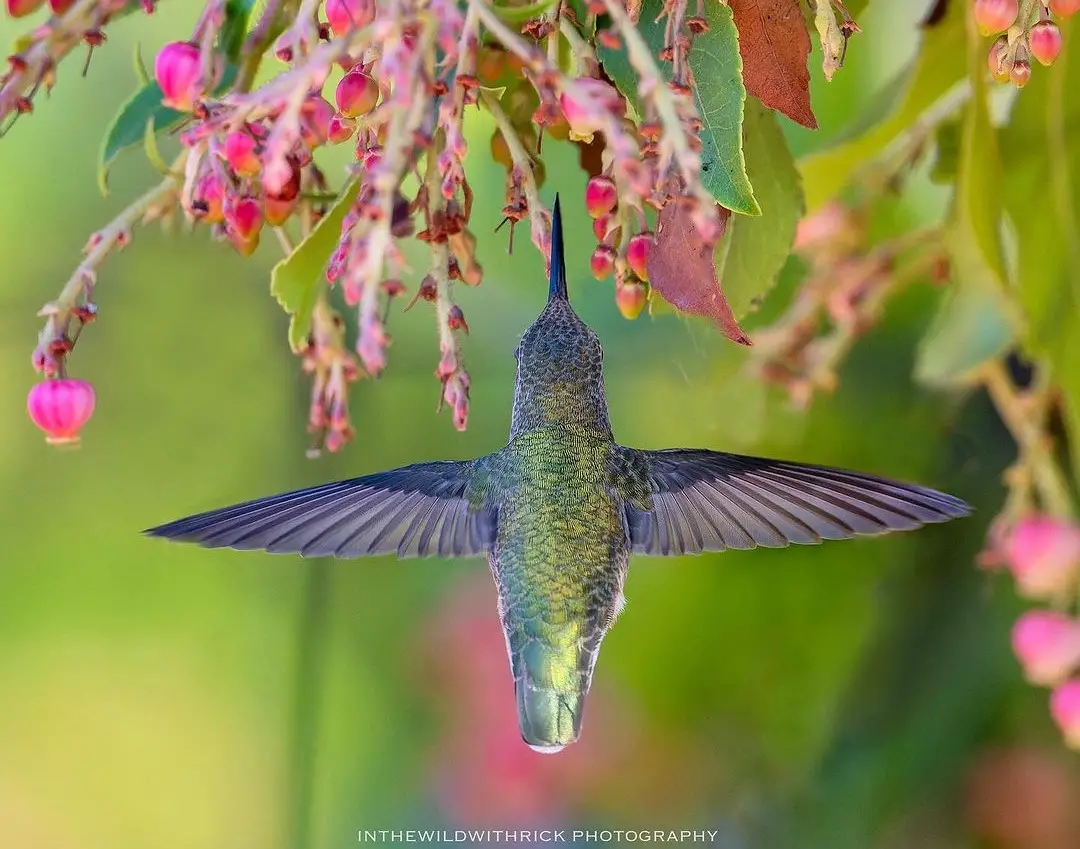
Photo by: IntheWildwithRick
Female Anna’s hummingbirds raise their young with no help from the males.
See my article: Hummingbird Parents: (Mating to Nesting)
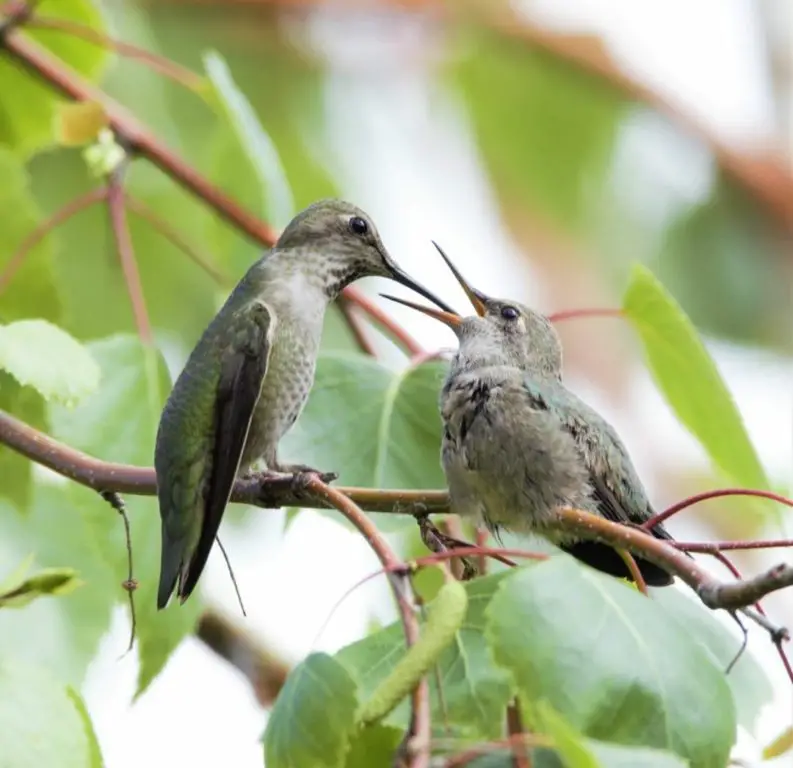
Photo by: Mehta.vishal.360
Juvenile Anna’s hummingbirds:
Juvenile Anna’s hummingbirds, both male and female, look more like adult females until they are differentiated as the male begins to acquire the bright red/magenta gorget.
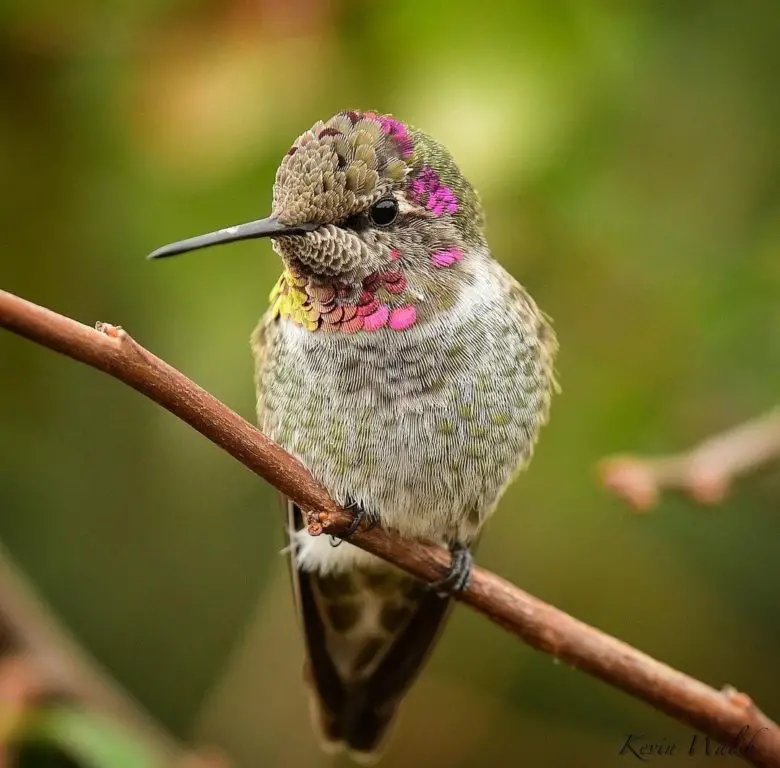
Photo by: Kevin Walsh
Note: This Anna’s hummingbird may be a youngster going through the awkward adolescent years, or it may be in the process of molting.
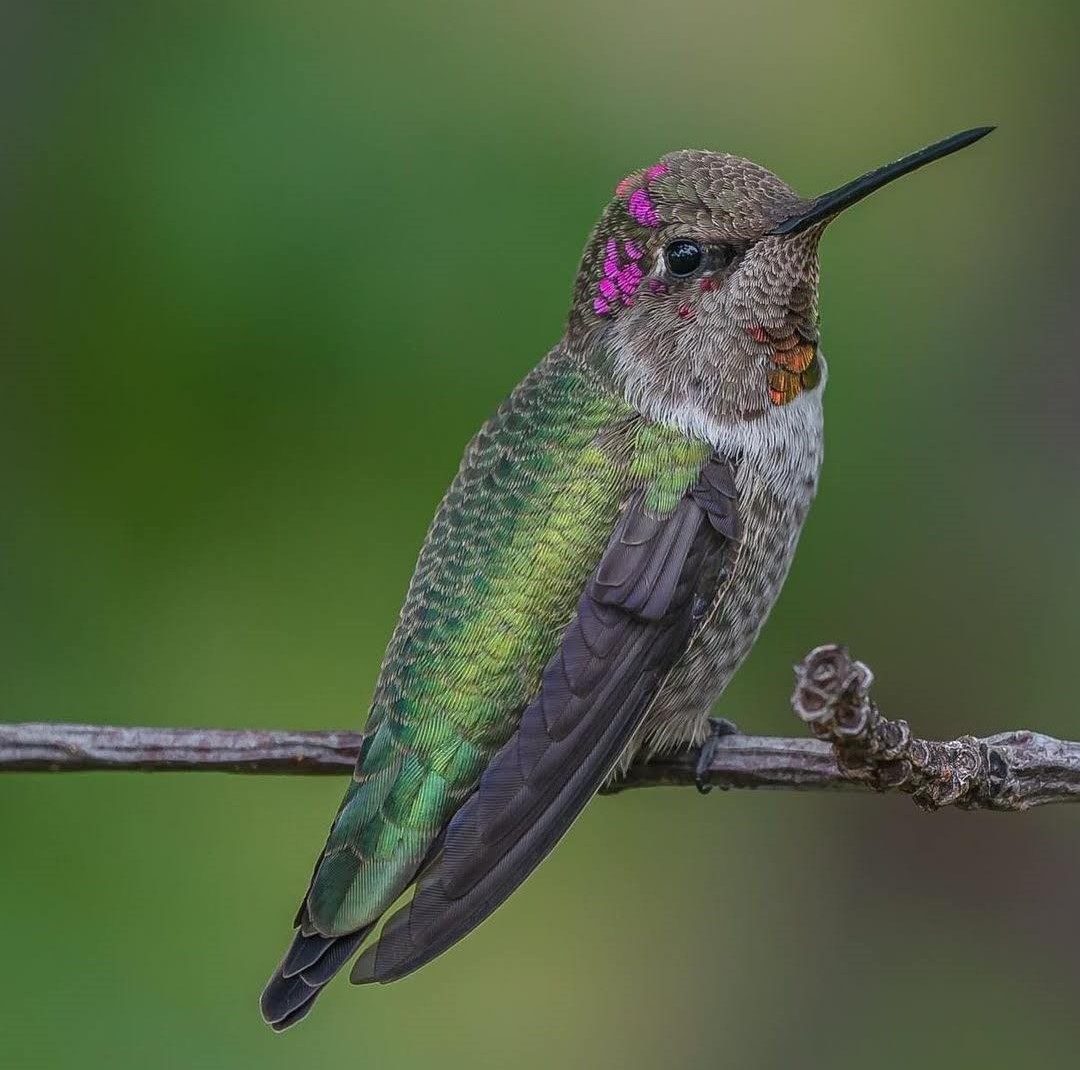
Photo by: Bob Free
Baby Anna’s hummingbirds:
Baby Anna’s hummingbirds are easily identified by their undertail coverts, which are white fluffy feathers near their bottom that will disappear as they age.
See my article: Baby Hummingbirds: (Egg to Fledgling)
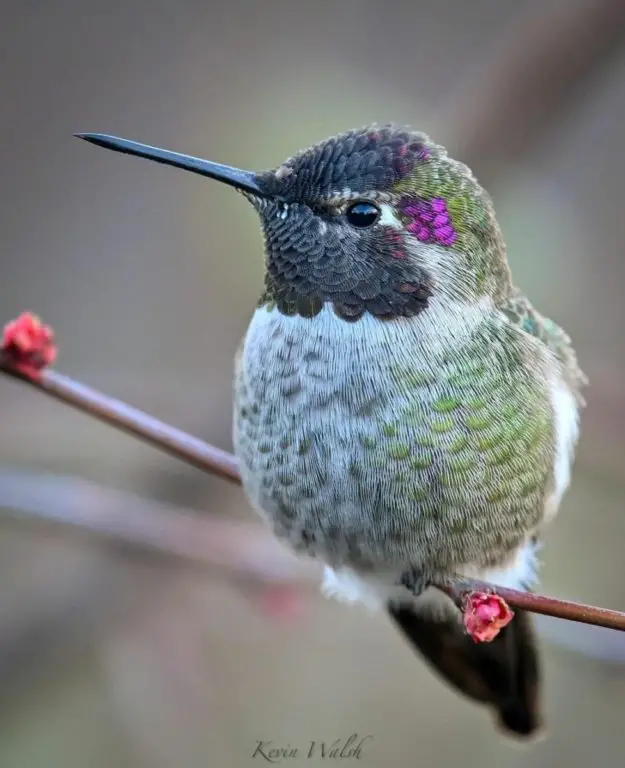
Photo by: Kevin Walsh
Note: The magenta head feathers of this baby/juvenile male Anna’s hummingbird are starting to show at his temple and a hint of color is beginning to appear on his gorget.
Also, notice the great fat reserves he has amassed from being fed by his vigilant mother and his newly white fluffy down feathers near his bottom.
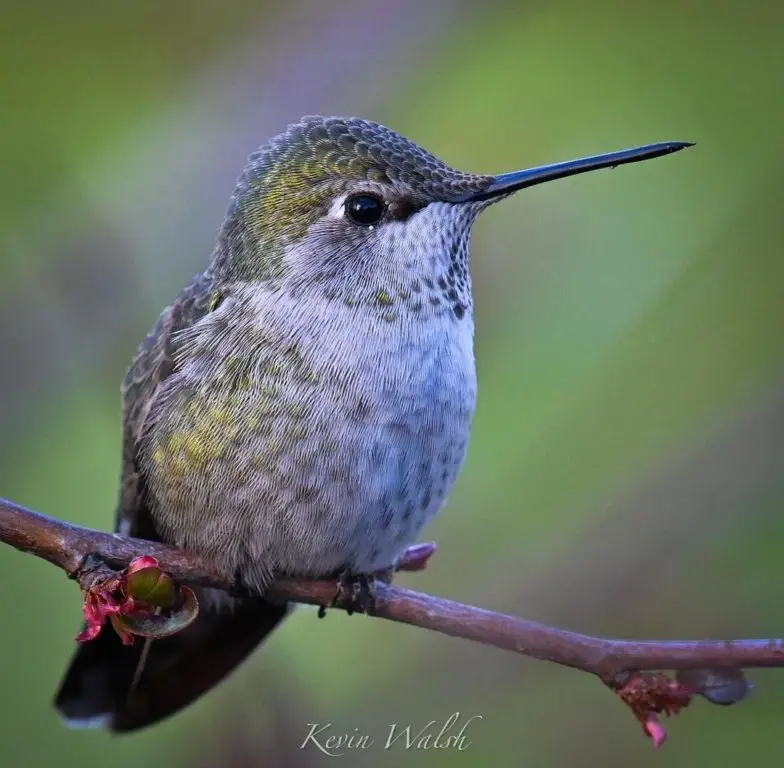
Photo by: Kevin Walsh
To see the current sighting map of Maryland’s Anna’s hummingbirds, click the link.
Hear the sounds of the Anna’s hummingbird (Cornell Lab of Ornithology link).
On average, out of 20,000 hummingbird sightings in Maryland, only 1 will be of an Anna’s hummingbird.
The only hummingbird to reside year-round on the Pacific Coast, the Anna’s hummingbird is a native of the west coast of North America. It enjoys a Mediterranean climate with hot, dry summers and fairly wet winters.
This species is a year-round resident in much of its range, unlike many other hummingbirds that migrate.
Male Anna’s are notable for their remarkable diving displays during mating season and their ability to thrive in urbanized areas.
The male Anna’s hummingbird executes dramatic and captivating displays during courtship and diving. The entire dive display lasts 12 seconds from start to finish.
See my article: Hummingbird Dance: 5 Interpretive Explanations
Unlike many northern temperate hummingbirds, male Anna’s hummingbirds sing during courtship along with making vibrations with their tail feathers to attract a female.
Anna’s hummingbirds protect their territory with elaborate dives targeted towards predatory birds and even towards people they perceive to be threatening.
See my article: Why Hummingbirds Chase Each Other: Is it Friend or Foe?
Anna’s hummingbirds hybridize and readily crossbreed with other hummingbird species, such as the Black-chinned, Costa’s, and Rufous hummingbirds.
The oldest male Anna’s hummingbird known to exist was 8 years and 2 months old when he was captured and released during a banding expedition in Arizona.
See my article: 3 Reasons Why Hummingbirds Are Banded
Which Maryland Hummingbirds Are Most Frequently Seen In The State?
The most frequently seen Maryland hummingbird is the Ruby-throated hummingbird, followed in a very distant second place by the Rufous hummingbird.
Maryland hummingbirds listed in order of frequency seen:
Ruby-throated Hummingbird: 98% of all hummingbirds seen in Maryland are Ruby-throated hummingbirds. Out of 10,000 Maryland hummingbirds seen, 9,872 will be a Ruby-throated hummingbird.
Rufous Hummingbird: 0.91% of all hummingbirds seen in Maryland are Rufous hummingbirds. Out of 10,000 Maryland hummingbirds seen, only 90 will be a Rufous hummingbird.
Calliope Hummingbird: 0.22% of all hummingbirds seen in Maryland are Calliope hummingbirds. Out of 10,000 Maryland hummingbirds seen, only 22 will be a Calliope hummingbird.
Black-chinned Hummingbird: 0.08% of all hummingbirds seen in Maryland are Black-chinned hummingbirds. Out of 10,000 Maryland hummingbirds seen, only 8 will be a Black-chinned hummingbird.
Allen’s Hummingbird: 0.03% of all hummingbirds seen in Maryland are Allen’s hummingbirds. Out of 10,000 Maryland hummingbirds seen, only 3 will be an Allen’s hummingbird.
Mexican Violetear Hummingbird: 0.03% of all hummingbirds seen in Maryland are Mexican Violetear hummingbirds. Out of 10,000 Maryland hummingbirds seen, only 3 will be a Mexican Violetear hummingbird.
Anna’s Hummingbird: Out of 20,000 Maryland hummingbirds seen, only 1 will be an Anna’s hummingbird.
Where In The State Are Maryland Hummingbirds Seen?
Hummingbirds are seen in Maryland throughout the state.
Some are seen throughout the entirety of the state, while others are only seen in specific, limited areas of Maryland.
Click the link below to see the current sighting map of where
Maryland hummingbirds are being seen (eBird.org links)
- Ruby-throated Hummingbird: This is where, in Maryland, current sightings of this hummingbird are being reported.
- Rufous Hummingbird: This is where, in Maryland, current sightings of this hummingbird are being reported.
- Calliope Hummingbird: This is where, in Maryland, current sightings of this hummingbird are being reported.
- Black-chinned Hummingbird: This is where, in Maryland, current sightings of this hummingbird are being reported.
- Allen’s Hummingbird: This is where, in Maryland, current sightings of this hummingbird are being reported.
- Mexican Violetear: This is where, in Maryland, current sightings of this hummingbird are being reported.
- Anna’s Hummingbird: This is where, in Maryland, current sightings of this hummingbird are being reported.
Read my article Maryland Hummingbird Migration
For more information about hummingbirds, read my other hummingbird articles.
Happy Hummingbird Watching!
Backyard Visitors participates in affiliate programs which compensate us for referring traffic.
